
What's Happening?
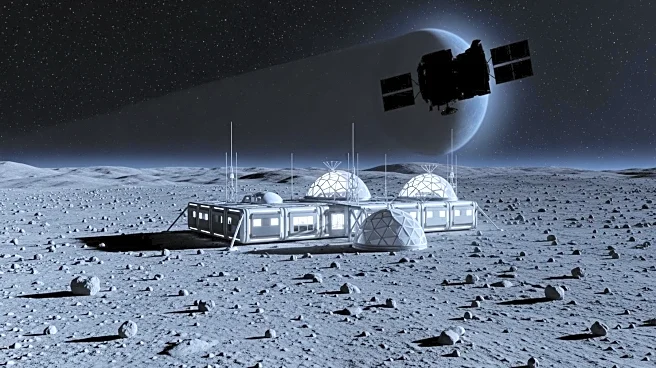
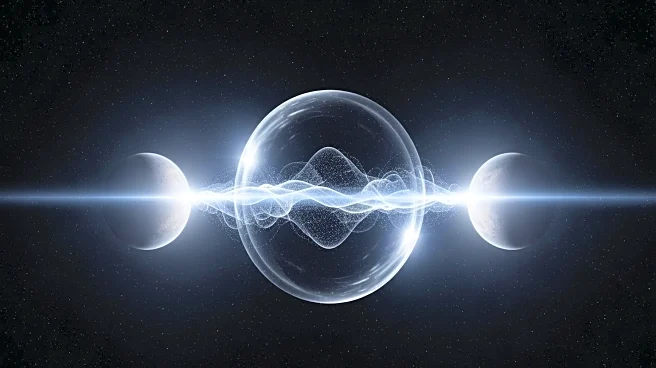
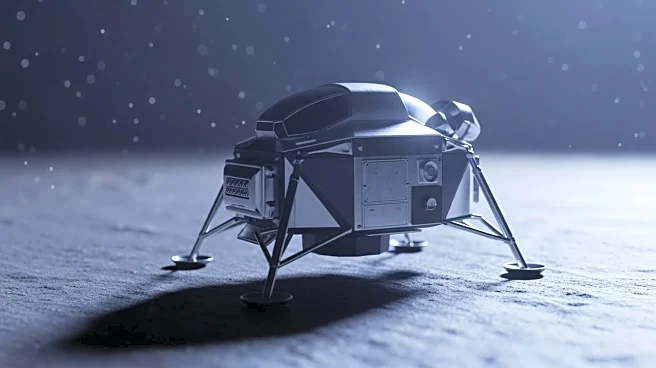
A study using data from China's Chang'e-4 lunar lander has revealed a 'cavity' of reduced cosmic radiation between Earth and the moon. This discovery challenges previous assumptions that galactic cosmic rays are uniformly distributed in this space. The
research, published in Science Advances, indicates that Earth's magnetic field extends its influence further than expected, affecting cosmic ray distribution. The study found a significant reduction in cosmic rays during the moon's local morning, suggesting that timing lunar surface operations during these hours could reduce astronauts' radiation exposure by about 20%. This finding is particularly relevant as NASA prepares for more crewed lunar missions.
Why It's Important?
Understanding the distribution of cosmic radiation is critical for the safety of astronauts on lunar missions. Cosmic rays pose significant health risks, including increased cancer risk due to DNA damage. The discovery of a radiation 'cavity' offers a potential strategy to mitigate these risks by scheduling lunar activities during periods of reduced radiation. This insight could influence mission planning and enhance the safety protocols for future lunar explorations, particularly as NASA's Artemis II mission approaches. The study also expands scientific knowledge about the extent of Earth's magnetic influence in space.
What's Next?
Further research is needed to better define the size and behavior of the radiation cavity. Larger datasets and additional studies could refine our understanding of cosmic ray distribution and Earth's magnetic influence. These findings may lead to new guidelines for lunar mission planning, optimizing safety and efficiency. As lunar exploration continues to advance, this research underscores the importance of international collaboration in space science, with potential implications for future missions beyond the moon.