








What's Happening?
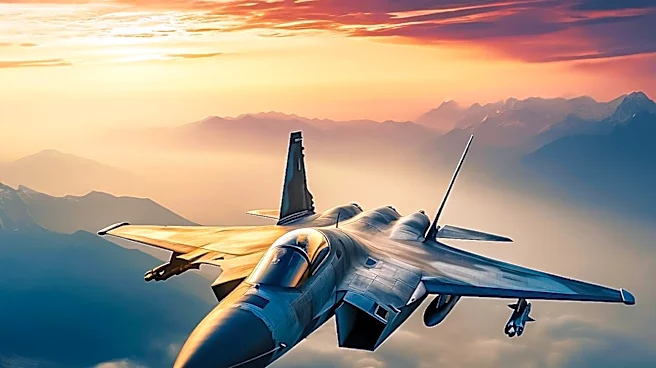
Anduril and General Atomics Aeronautical Systems (GA-ASI) are showcasing their latest uncrewed aircraft at the Farnborough International Airshow following their recent contract awards from the U.S. Air Force (USAF). The contracts, part of the USAF's Collaborative
Combat Aircraft (CCA) Increment 1 competition, involve the production of the first generation of uncrewed combat aircraft. Anduril's design, the Fury concept, and GA-ASI's FQ-42A are being prominently displayed. These aircraft have been in testing for nearly a year and were previously known by their experimental designations YFQ-44A and YFQ-42A. The contracts are a significant step in the USAF's plan to procure over 150 combat-capable CCAs by the end of the decade. The air show also featured a test launch of a Raytheon AIM-120 AMRAAM from the FQ-42A, highlighting the aircraft's capabilities.
Why It's Important?
The awarding of these contracts to Anduril and GA-ASI marks a pivotal moment in the evolution of military aviation, emphasizing the shift towards uncrewed combat systems. This development is crucial for the U.S. defense strategy, as it aims to enhance operational capabilities while reducing risks to human pilots. The integration of uncrewed aircraft into the USAF's fleet could lead to significant advancements in mission efficiency and effectiveness. Additionally, the focus on developing standardized software and mission autonomy underscores the importance of interoperability and technological innovation in modern warfare. The success of these programs could influence future defense procurement strategies and set a precedent for other military forces worldwide.
What's Next?
The USAF plans to name a primary mission autonomy provider for the CCA Increment 1 by the summer of 2027, which will be a critical step in ensuring the seamless integration of these aircraft into the existing fleet. The continued development and testing of these systems will likely involve collaboration with other defense contractors, such as RTX Collins Aerospace and Shield AI, to accelerate the delivery of mission-critical software. As the program progresses, stakeholders will be closely monitoring the performance and reliability of these uncrewed systems, which could lead to further contracts and expansions in the future.