




What's Happening?
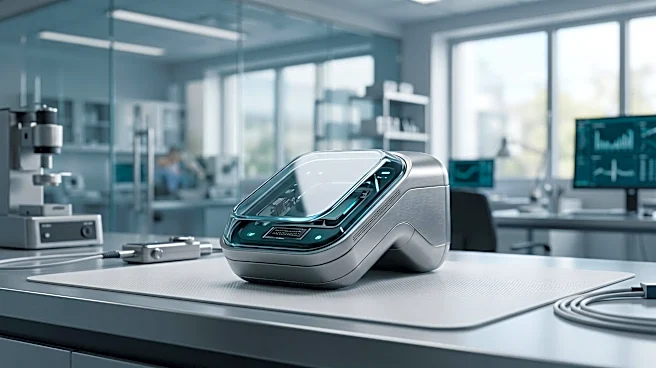
Ozelle is showcasing its AI-assisted hematology analyzers and diagnostic workflow solutions at MEDICA 2026. The company's O-Cyte 1 automated hematology analyzer combines complete blood count (CBC) testing with 7-part white blood cell differentiation and AI-assisted cell morphology
analysis. This system integrates high-resolution cell imaging and automated cell classification, allowing laboratory professionals to review individual cell images alongside numerical results when further evaluation is needed. The O-Cyte 1 supports a throughput of up to 60 tests per hour as a standalone analyzer, with expandability to 360 tests per hour through six connected units, offering modularity for varying laboratory workloads. Ozelle also features the EHBT-75 automated hematology analyzer, which combines 7-part white blood cell differentiation with cell imaging and morphology analysis, and the EHBT-50, a compact multifunctional platform integrating hematology, immunoassay, and dry biochemistry testing. Additionally, Ozelle highlights Open Dx, an AI Workbench designed to support AI-assisted report review and diagnostic result sharing, complementing their hematology analyzers by providing tools for managing test information.
Why It's Important?
The introduction of AI-assisted hematology analyzers by Ozelle at MEDICA 2026 signifies a notable advancement in laboratory diagnostics within the U.S. healthcare system. These technologies aim to enhance the efficiency and accuracy of blood analysis, which is fundamental to diagnosing a wide range of conditions, from infections to cancers. By combining automated testing with AI-assisted cell morphology analysis, laboratories can potentially reduce manual review times and improve the consistency of diagnoses. The modular design of systems like the O-Cyte 1 allows laboratories to scale their testing capacity according to demand, which is crucial for managing fluctuating patient volumes and optimizing operational costs. This innovation could lead to faster turnaround times for blood test results, enabling quicker clinical decisions and potentially improving patient care. For U.S. hospitals and clinics, these systems offer a pathway to modernize their diagnostic capabilities, address staffing shortages by automating routine tasks, and ensure high-quality diagnostic services across various clinical settings.
What's Next?
Ozelle's focus on integrating AI-assisted cell classification with scalable hematology testing and simplified instrument maintenance suggests a future where diagnostic laboratories can operate more efficiently. The company aims to support laboratory professionals in evaluating hematology results while accommodating varying testing volumes and operational requirements. The next steps will likely involve the broader adoption of these AI-powered systems in U.S. clinical laboratories, requiring training for laboratory staff and integration into existing laboratory information systems. As these technologies become more prevalent, there will be an ongoing need for validation studies to demonstrate their long-term impact on diagnostic accuracy, workflow efficiency, and patient outcomes. Furthermore, regulatory bodies will play a role in ensuring these AI-assisted devices meet stringent standards for medical diagnostics, paving the way for their widespread and confident use in healthcare.
Beyond the Headlines
The trend towards AI integration in laboratory diagnostics extends beyond mere efficiency; it represents a fundamental shift in how medical data is analyzed and interpreted. The ability of AI to provide high-resolution cell imaging and automated classification could lead to the discovery of subtle diagnostic markers that might be missed by human observation alone. This could have profound implications for early disease detection and personalized medicine. However, the reliance on AI also brings challenges, such as ensuring the transparency and interpretability of AI decisions, maintaining data privacy, and addressing the potential for algorithmic bias if training data is not diverse enough. The evolution of these technologies will necessitate a collaborative effort between AI developers, medical professionals, and regulatory bodies to harness the full potential of AI in improving diagnostic accuracy and patient care while mitigating associated risks. The long-term vision is a more precise and accessible diagnostic landscape, but one that requires careful ethical and practical considerations.