

What's Happening?
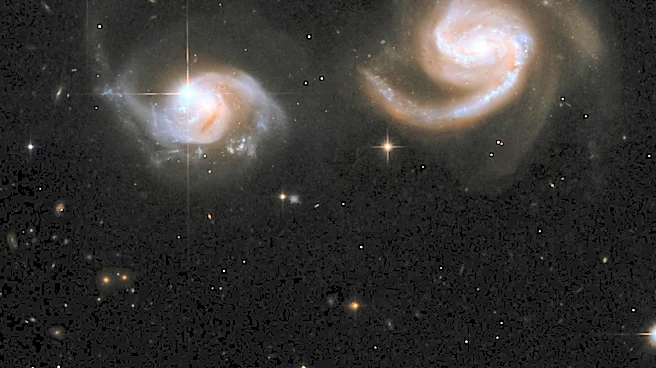
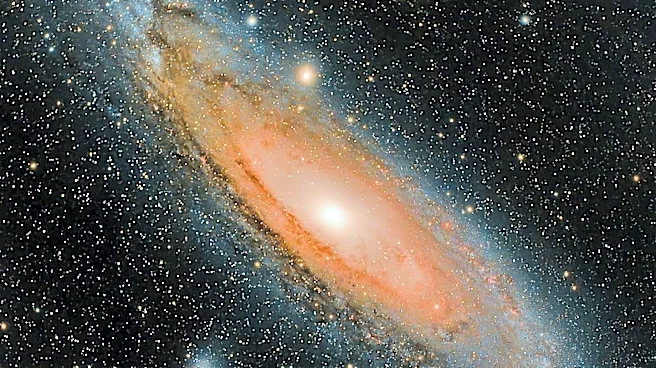
Astronomers using the Hubble Space Telescope have observed a significant slowdown in the star formation rate of the Andromeda galaxy over the past 40 million years. The research suggests that a smaller neighboring galaxy, M32, may have influenced this
change. The study involved analyzing the colors of 200 million stars in Andromeda, revealing a dramatic deceleration in star formation, particularly on the side of the galaxy closest to M32. This finding provides new insights into the interactions between galaxies and their impact on star formation.
Why It's Important?
Understanding the factors that influence star formation in galaxies is crucial for comprehending the evolution of galaxies over time. The potential impact of M32 on Andromeda's star formation rate highlights the complex interactions between galaxies and their environments. This research contributes to the broader field of astrophysics by providing evidence of how galactic neighbors can affect each other's development. The findings also underscore the importance of continued observations and studies of nearby galaxies to unravel the dynamics of the universe.
What's Next?
The upcoming launch of the Nancy Grace Roman Space Telescope will allow for more detailed observations of Andromeda and its neighboring galaxies. This new telescope will provide additional data to further investigate the interactions between Andromeda and M32. Future research will focus on confirming the role of M32 in Andromeda's star formation slowdown and exploring other potential influences on galactic evolution. These efforts will enhance our understanding of the complex processes that govern the life cycles of galaxies.