
What's Happening?
Dr. Stephen Kornfeld, an oncologist from Bend, Oregon, has been released from a biocontainment unit at the University of Nebraska Medical Center. He was isolated after assisting passengers on a cruise
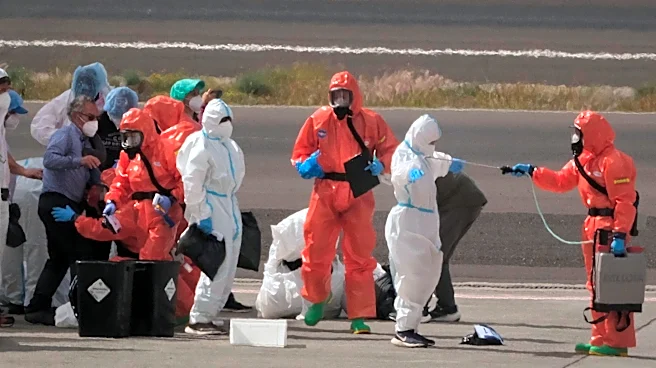
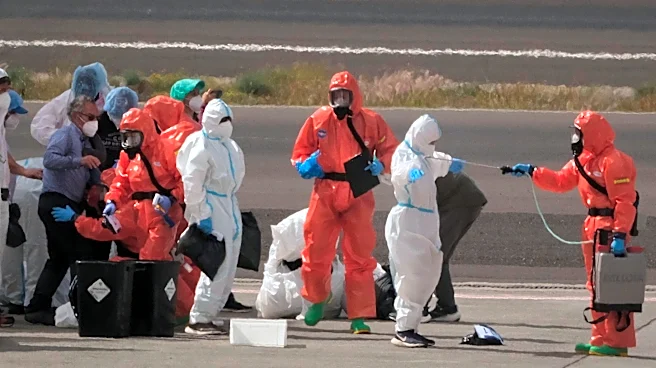
ship experiencing a hantavirus outbreak. Kornfeld was among over 120 passengers and crew evacuated and quarantined in various countries. Initially, he was the only American placed in isolation due to inconclusive nasal swab results. The World Health Organization reported 11 hantavirus cases linked to the cruise, including three deaths. Kornfeld, who experienced flu-like symptoms, has since tested negative and feels well. He will now join other Americans in the National Quarantine Unit for monitoring.
Why It's Important?
This incident marks the first hantavirus outbreak on a cruise ship, highlighting the challenges of managing infectious diseases in confined environments. The situation underscores the importance of rapid response and containment measures to prevent wider spread. The outbreak's management could influence future protocols for handling similar health crises on cruise ships and other travel settings. The low risk to the general public is reassuring, but the event raises awareness about hantavirus, which is typically spread through rodent droppings and not easily transmitted between humans. The case also emphasizes the role of international cooperation in health emergencies.
What's Next?
Passengers and crew from the affected cruise ship are advised to remain in quarantine for 42 days, as recommended by the WHO. Health authorities will continue monitoring those exposed to ensure no further spread of the virus. The incident may prompt cruise lines to review and enhance their health and safety protocols to better handle potential outbreaks. Public health officials will likely analyze the response to improve future preparedness and response strategies for similar situations. The CDC and WHO will continue to provide updates and guidance as more information becomes available.