





What's Happening?
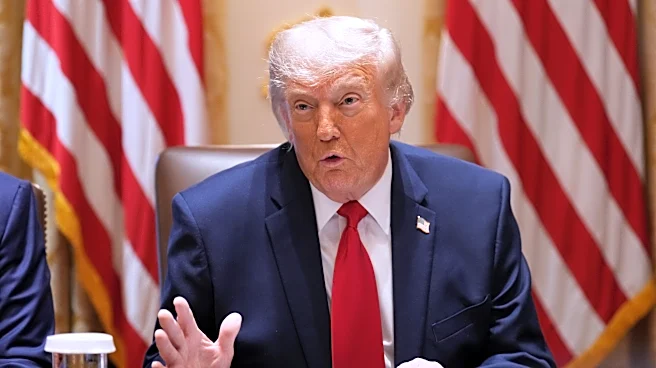
President Trump concluded a two-hour meeting in the Situation Room without making a final decision on a proposed deal with Iran. The deal aims to extend a ceasefire and initiate new nuclear talks. Key issues remain unresolved, including the unfreezing
of Iranian funds. Trump's demands include Iran's pledge not to develop nuclear weapons, reopening the Strait of Hormuz, and the removal of sea mines. Iranian officials have criticized these demands as excessive and have accused Trump of misrepresenting the agreement's terms. The negotiations are ongoing, with both sides needing to address significant differences before reaching a final agreement.
Why It's Important?
The negotiations are critical for regional stability and could have far-reaching implications for international relations and global markets. A successful deal could lead to the lifting of economic sanctions on Iran, potentially boosting its economy and altering the balance of power in the Middle East. Conversely, a breakdown in talks could lead to increased tensions and instability, affecting global oil prices and security. The U.S. demands, if met, could significantly limit Iran's nuclear capabilities, addressing a major concern for U.S. allies. The talks also involve key regional players like Oman and Pakistan, highlighting the complex geopolitical landscape.
What's Next?
Further negotiations are expected as both sides work to resolve outstanding issues. President Trump's final decision will be pivotal in determining the future of U.S.-Iran relations. The international community, including the International Atomic Energy Agency, may play a role in ensuring compliance with any agreement. The situation remains delicate, with potential for both diplomatic progress and setbacks. The outcome will likely influence U.S. foreign policy and regional dynamics in the Middle East.