







What's Happening?
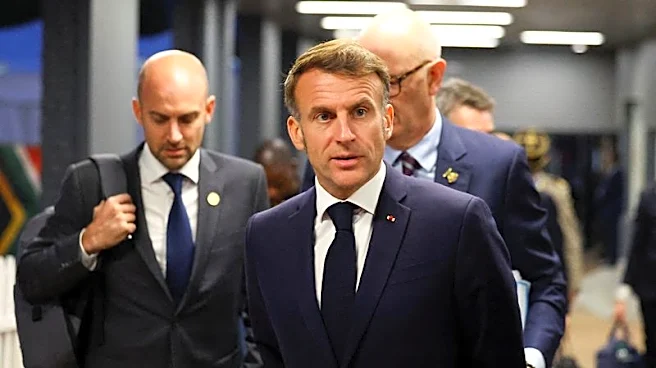
French President Emmanuel Macron has commenced a visit to Kenya in anticipation of the Africa Forward Summit. This summit is designed to highlight France's revised approach to its relationship with African nations, moving away from its historical role
as a colonial power to a partnership of equals. The summit, held for the first time in an Anglophone country, comes in the wake of France's withdrawal of troops from West Africa, a move that reflects its diminishing influence in the region. Macron's visit is marked by discussions with Kenyan President William Ruto, who views the summit as a potential turning point for improved partnerships. The event is expected to host 30 heads of state, with 10 already in attendance. The summit also coincides with the signing of 11 agreements between Kenya and France, covering investments in nuclear energy, transport, and agriculture.
Why It's Important?
This visit and the summit are significant as they represent a strategic pivot in France's foreign policy towards Africa. Historically, France has maintained a strong military and economic presence in its former colonies, a policy often criticized as 'Françafrique'. The shift towards a partnership model could redefine France's role in Africa, potentially leading to more equitable and mutually beneficial relationships. For Kenya, hosting the summit and signing new agreements with France could bolster its economic development and international standing. However, the choice of Kenya as the venue has drawn criticism from local opposition figures, who argue that the country's democratic and human rights record is under scrutiny. This criticism highlights the complex dynamics at play in international diplomacy and the challenges of balancing geopolitical interests with domestic issues.
What's Next?
The outcomes of the Africa Forward Summit could influence future diplomatic and economic engagements between France and African nations. The agreements signed between Kenya and France may lead to increased French investment in Kenya, potentially boosting sectors like energy and agriculture. However, the success of these initiatives will depend on the implementation of the agreements and the political climate in Kenya. Additionally, the summit's reception by other African leaders and the international community will be crucial in determining the effectiveness of France's new policy approach. Observers will be watching to see if this shift leads to tangible changes in France's influence and relationships across the continent.
Beyond the Headlines
The summit's focus on redefining France's role in Africa could have long-term implications for international relations and economic development in the region. By moving away from a colonial legacy, France may set a precedent for other former colonial powers in their dealings with African nations. This could lead to a broader reevaluation of international partnerships and aid strategies. Furthermore, the emphasis on sustainable development and modernized infrastructure in the agreements with Kenya aligns with global trends towards green energy and technological advancement, potentially positioning Kenya as a leader in these areas within Africa.