
What's Happening?
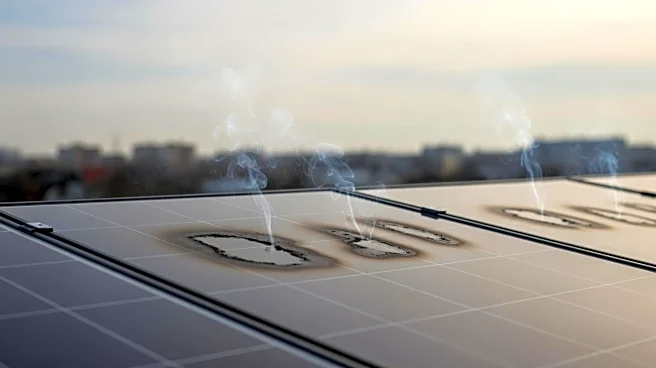
A research paper commissioned by the UK government has emphasized the need for a comprehensive approach to fire safety in rooftop solar installations. Conducted by OFR Consultants, the study reviewed literature
on how rooftop solar systems affect fire dynamics and pose additional risks to roof constructions and firefighting operations. The research found that solar panels can significantly influence fire behavior by increasing heat flux and fire spread rates. Key findings include the identification of a critical gap height between solar modules and roof surfaces that can minimize flame spread damage. The study also noted that existing classification tests and building guidance in England do not fully account for the fire dynamics introduced by solar arrays. Recommendations include using non-combustible roof coverings and introducing guidance on solar array configurations.
Why It's Important?
The findings of this research are crucial for improving fire safety standards in the growing solar energy sector. As solar installations become more prevalent, understanding their impact on fire dynamics is essential for developing effective safety measures. The study's recommendations could lead to changes in building codes and installation practices, potentially reducing the risk of fires associated with solar panels. This is particularly important for the U.S., where solar energy is a rapidly expanding industry. Implementing these safety measures could protect property and lives, and ensure the sustainable growth of solar energy infrastructure.
What's Next?
The research suggests further studies to validate the proposed safety measures and their efficacy. This could lead to the development of new testing standards that better represent the fire dynamics of solar arrays. Stakeholders in the solar industry, including manufacturers, installers, and regulators, may need to collaborate to integrate these findings into practice. Additionally, there may be a push for policy changes to enforce stricter safety standards for solar installations, ensuring that new and existing systems are equipped to handle potential fire risks.