






What's Happening?
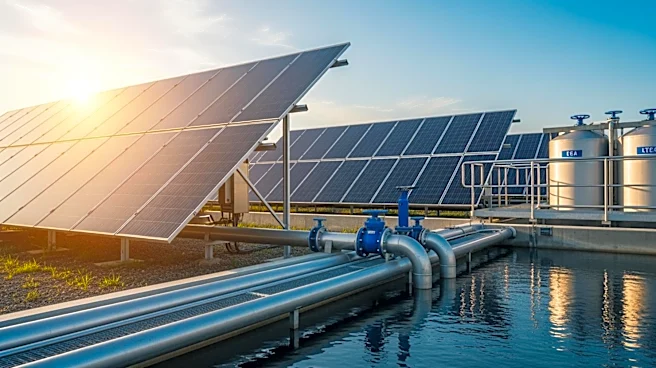
California has launched the Pastoria Solar Project, a 105-megawatt solar plant aimed at powering the Edmonston Pumping Plant, a key component of the state's water delivery system. This project is part of California's plan to fully decarbonize operations
by 2035. The solar plant is co-located with an 80-megawatt battery storage bank and a 750-megawatt natural gas-fired plant, providing energy reliability. The project comes as California faces rising energy demand due to artificial intelligence data centers, putting pressure on grids strained by extreme heat and aging infrastructure. The solar plant represents a major step in the California Department of Water Resources' efforts to achieve clean energy goals.
Why It's Important?
The Pastoria Solar Project is crucial for California's clean energy transition, helping to decarbonize the state's water delivery system. By reducing reliance on fossil fuels, the project supports California's long-term energy goals and addresses the challenges posed by climate change. The initiative also highlights the importance of renewable energy in meeting rising energy demands, particularly as artificial intelligence data centers increase pressure on existing infrastructure. The project sets a standard for other public agencies across the U.S., demonstrating the feasibility of achieving clean energy goals while maintaining reliable water delivery.
What's Next?
The solar project is expected to increase water costs for contractors purchasing from the State Water Project, raising concerns among agencies. However, the initiative is seen as a necessary step to address climate change and ensure reliable water delivery. The project is part of a broader effort to bring new clean energy resources online, with additional solar projects slated to come online in the coming years. As federal tax credits for commercial solar projects expire, California aims to take advantage of cost savings and continue its clean energy development.