


What's Happening?
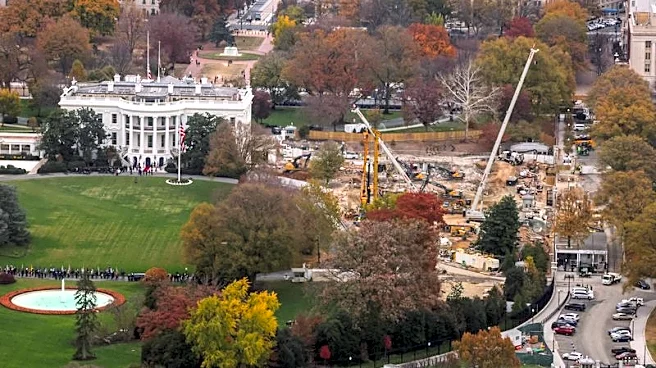
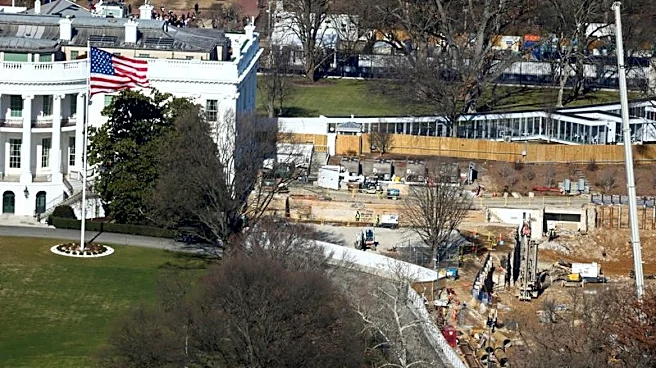
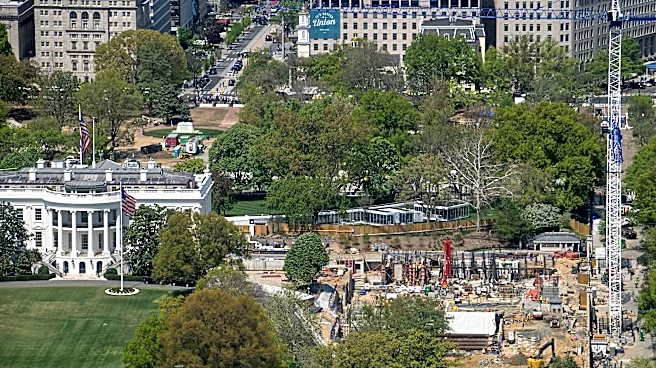
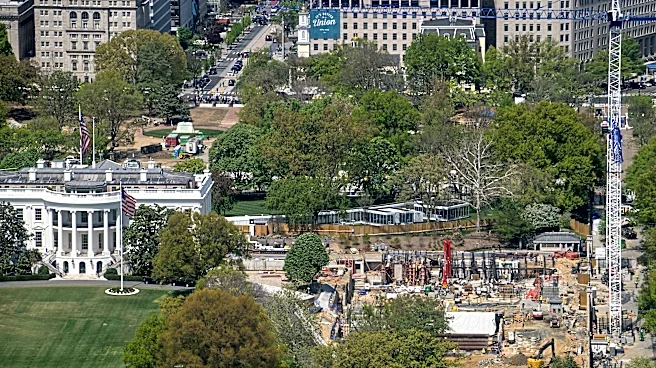
A three-judge panel from the U.S. Court of Appeals for the District of Columbia Circuit has temporarily allowed the construction of a $400 million ballroom at the White House to continue. This decision comes after a lower court's preliminary injunction
was put on hold, pending further review. The appeals court plans to hear arguments on June 5 to determine whether construction should be halted during the appeal process. The underlying lawsuit, filed by the National Trust for Historic Preservation, challenges the Trump administration's authority to demolish the East Wing and build the ballroom without congressional approval. The National Trust argues that the demolition and construction lack proper authorization from the National Park Service and Congress. President Trump has promoted the ballroom as a significant addition to the White House, emphasizing that it is funded by private donors and aims to modernize infrastructure and enhance security.
Why It's Important?
The decision to allow construction to proceed, even temporarily, highlights ongoing tensions between historic preservation efforts and modernization initiatives at the White House. The case underscores the legal complexities involved in altering historic sites, particularly those with significant national importance. The outcome of this legal battle could set a precedent for future projects involving federal properties and the extent of executive authority in such matters. The project, if completed, could impact the architectural landscape of the White House and influence future presidential administrations' approaches to infrastructure and security enhancements. Additionally, the case raises questions about the balance of power between the executive branch and Congress in approving significant alterations to national landmarks.
What's Next?
The upcoming hearing on June 5 will be crucial in determining whether the construction can continue while the appeal is pending. The decision could prompt reactions from various stakeholders, including historic preservationists, political leaders, and the public. If the court rules in favor of halting construction, it may lead to further legal challenges and delays. Conversely, if the construction is allowed to proceed, it could embolden future administrations to undertake similar projects without congressional approval. The case may also prompt legislative action to clarify the roles and responsibilities of federal agencies and the executive branch in managing historic sites.