





What's Happening?
The Arizona Corporation Commission (ACC) unanimously voted to redact portions of a public meeting, including the transcript and video recording, to remove references to a former employee. This decision followed a public debate regarding the authority
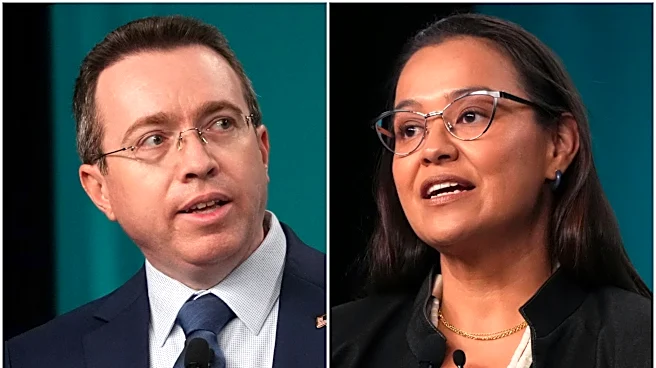
of the executive director over firing decisions, specifically concerning the termination of Laurie Woodall, policy advisor to Commissioner Lea Márquez Peterson, without Peterson's prior notification. General Counsel Tom Van Flein advised the commissioners that the discussion should have occurred in executive session, deeming it a personnel matter. Following his urging, the Commission retroactively classified mentions of Woodall as private content and moved to redact them from public records. First Amendment attorney David Bodney stated that this action appears to violate Arizona’s open meeting laws, which mandate government bodies conduct their business publicly in most situations. Bodney also noted that the meeting's agenda, which listed only statutory citations, did not meet the legal requirement to specify the matters to be discussed.
Why It's Important?
This action by the Arizona Corporation Commission raises significant concerns about government transparency and adherence to open meeting laws in the U.S. The potential violation of these laws undermines public trust in governmental processes and limits citizens' ability to oversee the actions of their elected and appointed officials. If public bodies can retroactively redact discussions from public records, it sets a dangerous precedent that could allow for the concealment of information deemed inconvenient or sensitive, even if it was initially discussed in public. This could lead to a less accountable government, where decisions and debates are shielded from public scrutiny. For U.S. citizens, this means a reduced capacity to understand how decisions are made, particularly on matters that affect public services and regulations, such as those handled by the Corporation Commission. The incident highlights the ongoing tension between government privacy concerns and the public's right to know.
What's Next?
The Arizona Attorney General’s Office, responsible for enforcing open meeting laws, has acknowledged awareness of the matter but has not yet received a formal complaint. Should a complaint be filed, the Attorney General’s Office would likely investigate the ACC's actions to determine if a violation occurred. This could lead to legal challenges against the Commission, potentially forcing them to reverse the redactions and adhere more strictly to open meeting requirements in the future. Additionally, the Commission approved Commissioner Márquez Peterson’s motion to seek external legal counsel to obtain an opinion on the legality of Woodall’s firing. This indicates that the underlying personnel issue remains unresolved and may lead to further legal or administrative proceedings. The outcome of these processes could clarify the scope of executive director authority within the ACC and establish precedents for handling similar personnel matters in public bodies.
Beyond the Headlines
The incident with the Arizona Corporation Commission extends beyond a simple procedural dispute; it touches upon the fundamental principles of democratic governance and the public's right to information. The attempt to retroactively redact public records, especially after a discussion has already taken place openly, suggests a potential disregard for the spirit of transparency laws. This could foster a culture of secrecy within government agencies, making it harder for the public and media to hold officials accountable. The legal interpretation of what constitutes a 'personnel matter' that warrants executive session versus a public discussion is also at play, highlighting the ambiguities that can be exploited to limit transparency. This case could serve as a critical test for the enforcement of open meeting laws in Arizona, potentially influencing how other state and local government bodies manage their public records and discussions, thereby impacting the broader landscape of governmental transparency across the U.S.