


What's Happening?
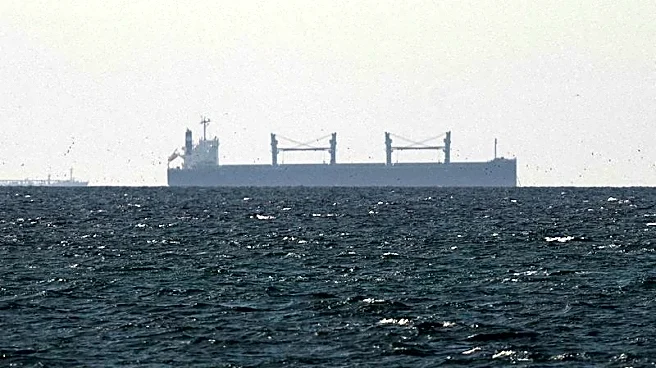
Bahrain has circulated a revised draft resolution to the United Nations Security Council aimed at protecting commercial shipping in the Strait of Hormuz. The draft retains language authorizing 'all necessary means' to ensure safe passage but omits explicit
references to binding enforcement. This move comes amid heightened tensions in the region, with Iran's actions affecting shipping routes. The resolution encourages states reliant on these maritime routes to coordinate defensive efforts, including escorting merchant vessels. The draft is still under negotiation, with a tentative vote expected soon.
Why It's Important?
The Strait of Hormuz is a critical chokepoint for global oil supplies, with about a fifth of the world's oil passing through it. Ensuring the security of this route is vital for global energy markets and economic stability. The resolution's passage could lead to increased international naval presence in the region, potentially escalating tensions with Iran. The involvement of major powers like the U.S., Russia, and China, who hold veto power in the Security Council, adds a layer of complexity to the resolution's adoption.
What's Next?
The resolution's future depends on negotiations among Security Council members, particularly the positions of Russia and China, who have historically supported Iran. If adopted, the resolution could lead to coordinated international efforts to secure the Strait, impacting global oil prices and regional geopolitics. The outcome will also influence U.S. foreign policy and its relations with Gulf states.