





What's Happening?
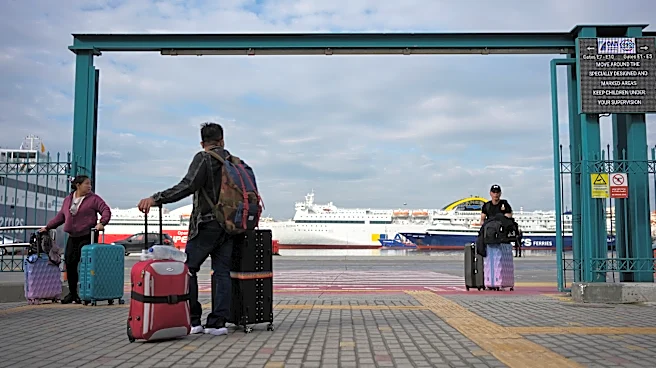
Four French rail workers' unions have called for a walkout on November 5, 2026, affecting SNCF train services across Paris and France. This strike coincides with the eve of the TGV M's launch. The action is part of a broader general strike movement initiated
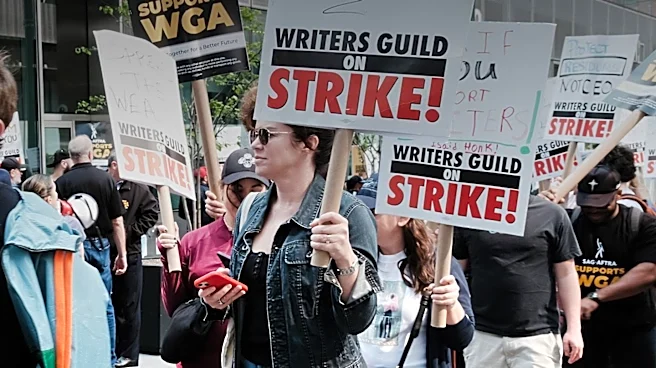
by the CGT, and subsequently supported by the CFDT and the Snes-FSU. This wider movement is expected to impact various sectors, including transport and schools, and will include a protest in Paris. The decision to proceed with the strike follows a meeting at Matignon that union representatives deemed unproductive. This industrial action is set to cause significant disruptions for commuters and travelers throughout France.
Why It's Important?
The planned general strike in France, particularly the rail workers' walkout, highlights ongoing labor tensions and the power of unionized workforces to disrupt national infrastructure. For the U.S., while not directly impacted, such events in major European economies can serve as a case study for labor relations and the potential for widespread industrial action to affect economic activity and public services. It underscores the challenges governments face in negotiating with powerful unions, especially when new technologies or services, like the TGV M, are being introduced. The disruption to transport and schools can have a ripple effect on productivity and daily life, demonstrating the critical role of these sectors in a functioning society. Businesses with operations or supply chains in France could experience delays and increased costs due to the transport disruptions.
What's Next?
The SNCF strike on November 5, 2026, is confirmed, and further details regarding the extent of train, RER, and other transport disruptions are expected to be released. The general strike, supported by multiple unions, suggests that the impact will extend beyond rail services to include schools and other public sectors, with a protest planned in Paris. Commuters and travelers in France are advised to anticipate significant delays and cancellations. Authorities and transport operators will likely issue more specific guidance on affected routes and alternative travel options as the date approaches. The outcome of the strike and the government's response could influence future labor negotiations and the broader social and economic landscape in France.
Beyond the Headlines
This strike action in France reflects a deeper societal dynamic where labor unions play a significant role in public discourse and policy. The timing, coinciding with the launch of the TGV M, suggests a strategic move by unions to leverage a high-profile event for maximum impact and visibility for their demands. Beyond immediate disruptions, such strikes can influence public perception of government effectiveness and corporate responsibility. It also raises questions about the balance between technological advancement and worker protections, and how new innovations are integrated without alienating the existing workforce. The broader general strike indicates a collective dissatisfaction that extends beyond specific industries, pointing to potential underlying economic or social grievances within the country.