






What's Happening?
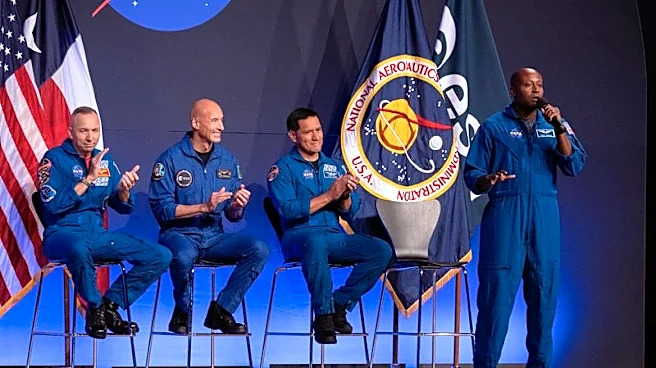
NASA has announced the crew for the Artemis III mission, scheduled for 2027, which aims to test the Orion spacecraft's rendezvous and docking capabilities with commercial lunar landers. The mission will involve four prime crew members and one backup astronaut.
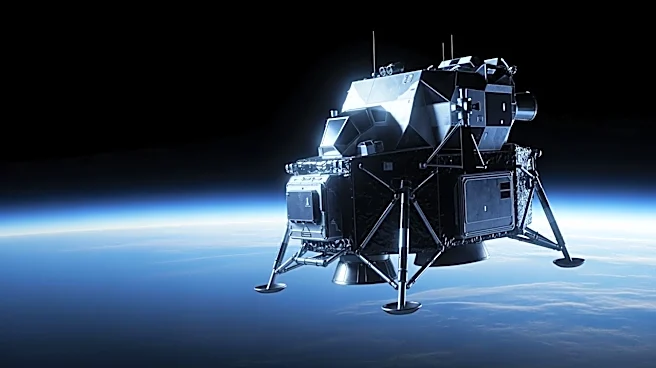
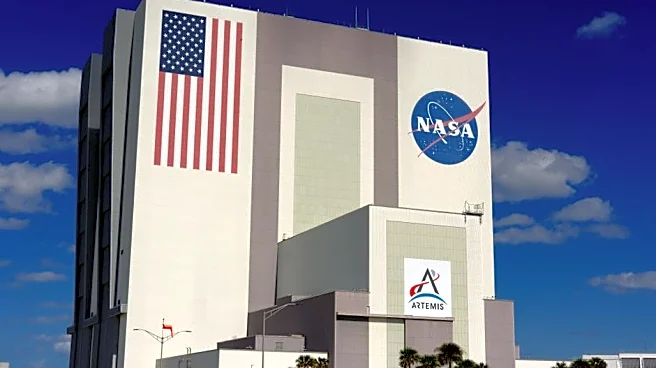
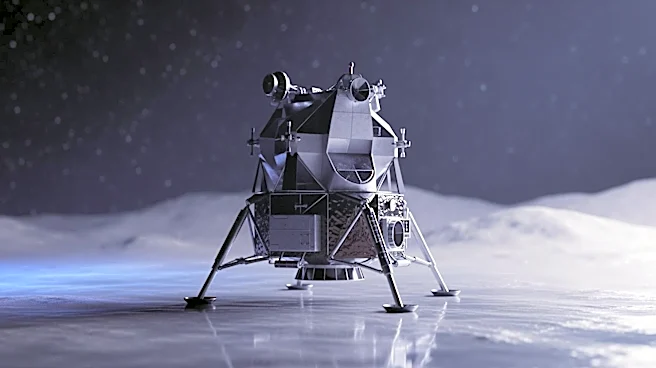
The crew includes Andre Douglas, Frank Rubio, Luca Parmitano, and Randy Bresnik, with Bob Hines serving as the backup. The mission will launch from Kennedy Space Center in Florida aboard NASA's Space Launch System rocket. During the two-week mission, the Orion spacecraft will perform docking demonstrations with lunar landers developed by Blue Origin and SpaceX. This mission is a critical step in testing integrated hardware, software, propulsion, and communication systems for future Artemis missions.
Why It's Important?
The Artemis III mission is pivotal for NASA's long-term lunar exploration goals, as it will validate key technologies and operations necessary for sustained human presence on the Moon. The mission's success will demonstrate American innovation and international cooperation, as it involves collaboration with commercial partners like Blue Origin and SpaceX. The mission also sets the stage for Artemis IV, which aims to be the first crewed mission to the lunar South Pole in 2028. By advancing these technologies, NASA is paving the way for future deep space exploration, potentially benefiting scientific research, international partnerships, and the commercial space industry.
What's Next?
Following the Artemis III mission, NASA plans to continue its preparations for Artemis IV, which is scheduled for 2028. This mission will focus on landing astronauts at the lunar South Pole, a region of significant scientific interest due to its potential water ice deposits. NASA and its partners will continue to develop and refine the technologies and systems tested during Artemis III, ensuring they are ready for more complex missions. The success of Artemis III will likely influence future funding and international collaboration opportunities, as well as inspire public interest and support for space exploration.