







What's Happening?
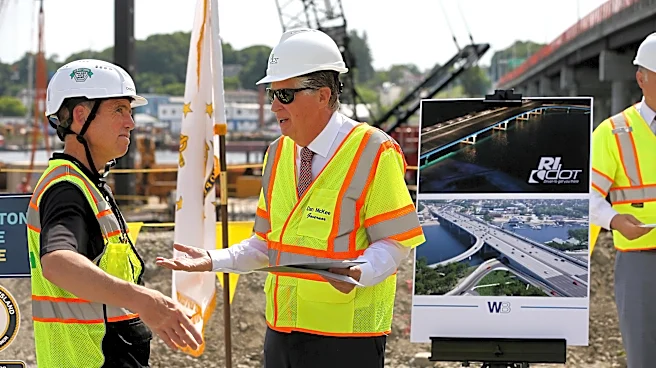
The Rhode Island Department of Transportation (RIDOT) has announced the full reopening of I-195 in both directions in East Providence. The highway was temporarily closed starting at 10 p.m. last night for the safe demolition of the Potter Street Bridge,
a critical component of the ongoing Washington Bridge rebuild project. Eastbound lanes were reopened by 11 a.m., with westbound lanes following at noon. This closure was implemented to expedite the demolition process and minimize long-term traffic disruptions. RIDOT expressed gratitude for the patience of residents and local businesses during this period. The Potter Street Bridge is slated for reconstruction over the next 12 to 18 months. The new bridge will facilitate a wider highway corridor, adding more travel lanes on I-195 West. Upon completion, the project aims to provide four continuous westbound travel lanes between the Broadway interchange and the Washington Bridge, along with a new fifth lane leading to an off-ramp at Waterfront Drive. These enhancements are designed to alleviate persistent traffic congestion on I-195 West, which frequently extends towards the Massachusetts state line. The decision for a single, full closure was made to avoid prolonged, phased demolition that would have required extensive bracing supports and continuous lane closures, impacting traffic over a much longer duration.
Why It's Important?
The reopening of I-195 is crucial for maintaining regional connectivity and economic activity in Rhode Island and the surrounding areas. The temporary closure, while disruptive, was a strategic move by RIDOT to accelerate a key phase of the Washington Bridge rebuild project. This project is vital for improving infrastructure and addressing long-standing traffic congestion issues on a major interstate artery. The planned expansion of I-195 West with additional lanes and a new off-ramp is expected to significantly enhance traffic flow, reducing commute times and improving freight movement. This will benefit commuters, local businesses, and the broader regional economy by making transportation more efficient. The project's success will also demonstrate effective infrastructure management and planning, potentially setting a precedent for future large-scale public works. Delays or inefficiencies in such projects can have ripple effects on local commerce and daily life, making the timely execution and reopening of critical routes paramount for public confidence and economic stability.
What's Next?
The Potter Street Bridge will undergo a complete reconstruction over the next 12 to 18 months, with RIDOT anticipating its reopening in the summer of 2028. During this reconstruction period, drivers needing to cross I-195 at Potter Street are advised to use the adjacent Purchase Street Bridge, which will add approximately one minute to their travel time between Warren Avenue and Cobb Street. Pedestrians have a shorter detour available via School Street, Purchase Street, and Freeborn Street. The broader Washington Bridge rebuild project will continue, focusing on creating a wider highway corridor with additional travel lanes on I-195 West. These improvements are expected to be fully realized by the time the new Potter Street Bridge is completed, aiming to provide four continuous westbound travel lanes and a new off-ramp at Waterfront Drive. RIDOT will likely continue to issue advisories regarding any future construction-related traffic impacts or detours as the project progresses. All construction schedules are subject to potential changes based on operational needs, unforeseen circumstances, and weather conditions.
Beyond the Headlines
The strategic decision by RIDOT to implement a full, albeit temporary, closure for the demolition of the Potter Street Bridge highlights a growing trend in infrastructure management: prioritizing short-term, intense disruption for long-term efficiency and reduced overall project timelines. This approach minimizes the cumulative impact of prolonged, partial closures that can lead to extended periods of traffic congestion and economic strain. The Washington Bridge rebuild project, of which the Potter Street Bridge is a part, represents a significant investment in regional infrastructure. Its successful completion could serve as a model for other states grappling with aging infrastructure and increasing traffic demands. The project also underscores the complex interplay between urban planning, transportation logistics, and community impact, as residents and businesses are directly affected by such large-scale undertakings. The long-term benefits of reduced congestion and improved connectivity are expected to foster economic growth and enhance the quality of life for commuters in the region, demonstrating the critical role of robust infrastructure in regional development.