






What's Happening?
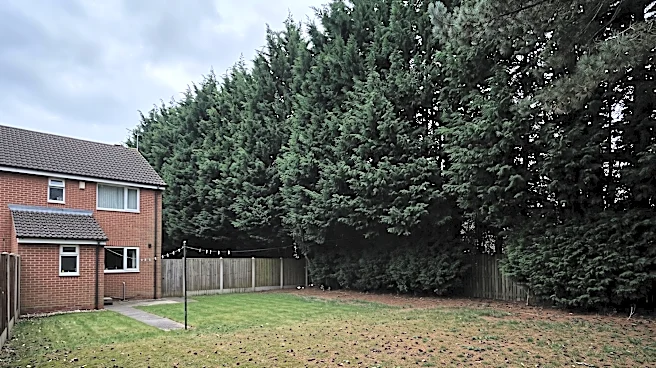
Residents in the Staffordshire Moorlands village of Tean are expressing significant concerns over towering trees, some estimated to be over 60 feet tall, planted by the neighboring Greatwood Community Primary School approximately 30 years ago. Homeowners,
including Maureen Forsyth and Andrew Ibbotson, describe feeling 'hemmed in' and that the trees 'block out the sky,' creating an environment akin to 'living in the woods.' Maureen Forsyth fears that if one of these large trees were to fall, it could not only damage homes but also endanger lives. Andrew Ibbotson highlights the constant effort required to clean up debris from the trees. Another resident, Kay Mitchell, who has lived next to the school for 49 years, states that the trees have become a 'blight' and should not have been planted so close to residential properties. The residents are seeking accountability from the school, arguing that the trees do not affect the school in the same way they impact nearby homes.
Why It's Important?
This situation underscores the complex challenges that can arise between institutional land use and residential property rights, particularly concerning environmental elements like large trees. The residents' concerns about safety, property damage, and quality of life highlight potential liabilities for institutions like schools, which are responsible for maintaining their grounds. The dispute also brings to light the limitations of local authorities, as Staffordshire Moorlands District Council stated it has no statutory role because the trees are not protected by a Tree Preservation Order and are not in a conservation area. This lack of regulatory oversight leaves residents feeling powerless and reliant on the goodwill of the school. The cost of remediation, estimated by an independent arborist to be 'tens of thousands of pounds' for clearing a row of trees, indicates a significant financial burden, raising questions about who should bear such costs in similar disputes.
What's Next?
Greatwood Community Primary School, part of the Moorlands Primary Federation (TMPF) Trust, has stated it takes tree management 'very seriously' and regularly commissions safety surveys. The most recent assessment was conducted in May. The school has also expressed willingness to meet with neighboring residents to 'work respectfully towards a resolution for all parties.' An independent arborist, Mike Kirk of Northwest Trees and Stumps, has assessed the trees and recommended 'selected removals' of weaker and self-seeded trees to promote healthier growth and a more natural canopy. Residents have been advised by the council to seek advice from an independent arboricultural consultant, a process that is currently underway. The outcome will likely depend on further dialogue between the residents and the school, potentially guided by the recommendations of arboricultural experts, to find a mutually agreeable solution that addresses safety concerns and quality of life for the residents.
Beyond the Headlines
This local dispute reflects broader issues concerning urban and suburban planning, the integration of natural elements within developed areas, and the responsibilities of property owners. The residents' inability to trim branches overhanging their land due to their height, despite legal rights to do so, highlights practical limitations that can complicate property disputes. The council's stance that it has no statutory role unless trees are deemed dangerous or protected by specific orders reveals a gap in local governance regarding aesthetic and quality-of-life impacts of large trees on private land. This case could set a precedent for how similar conflicts are resolved in areas where large-scale planting by institutions impacts adjacent residential properties, potentially leading to calls for clearer guidelines or mediation processes for such neighborly disputes. It also emphasizes the importance of proactive tree management and community engagement by institutions to prevent such situations from escalating.