







What's Happening?
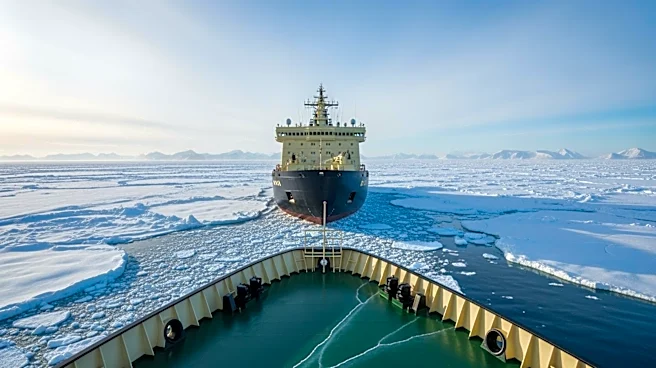
The U.S. Coast Guard's newest polar icebreaker, USCG Storis, has successfully completed a 36-day deployment in the Bering Sea under harsh winter conditions. Commissioned in 2025, Storis is the first polar icebreaker added to the Coast Guard in over two
decades. Originally built for commercial use, the 360-foot vessel is now being adapted for military operations. During the deployment, the crew focused on operational readiness and interoperability with other military assets, testing the cutter's icebreaking capabilities. The mission included joint exercises with the USCGC Waesche and advanced ice rescue training, demonstrating the vessel's critical role in Arctic operations.
Why It's Important?
The deployment of USCG Storis underscores the strategic importance of the Arctic region to U.S. national security and maritime operations. As climate change opens new shipping routes and increases geopolitical interest in the Arctic, the U.S. Coast Guard's enhanced icebreaking capabilities are crucial for maintaining a presence in these high-latitude areas. The Storis serves as a bridge to the future icebreaker fleet, ensuring continued operational capability while new vessels are being developed. This deployment also highlights the need for ongoing investment in Arctic infrastructure and training to support U.S. interests in the region.
What's Next?
The USCG Storis will continue its commissioning process, with further modifications to meet military specifications. The vessel is expected to be permanently stationed in Juneau, Alaska, by 2029, once the necessary infrastructure is in place. The Coast Guard will continue to evaluate the Storis's performance to inform future icebreaker designs and operations. As the U.S. prepares for the delivery of new icebreakers, expected by 2030, the Storis will play a vital role in maintaining Arctic readiness and supporting U.S. strategic objectives in the region.