




What's Happening?
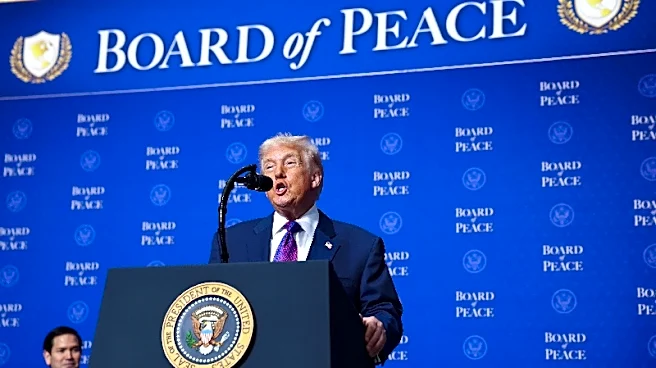
The Trump administration has issued a warning to the Palestinian delegation at the United Nations, threatening to revoke their visas if Palestinian ambassador Riyad Mansour does not withdraw his candidacy for the vice presidency of the UN General Assembly.
This development was revealed in an internal State Department cable, which highlighted concerns that Mansour's bid could escalate tensions and undermine President Trump's Gaza peace plan. The cable, marked as sensitive but unclassified, instructed U.S. diplomats to communicate this message to the Palestinian Authority, which exercises limited self-rule in the West Bank. The State Department had previously waived visa sanctions for Palestinian officials in New York, but the cable suggested that this decision could be revisited if the candidacy proceeds. Mansour had already withdrawn from a previous bid for the presidency of the General Assembly due to U.S. lobbying efforts.
Why It's Important?
This situation underscores the ongoing tensions between the U.S. and the Palestinian Authority, particularly in the context of President Trump's Middle East policies. The threat of visa revocation highlights the leverage the U.S. holds over Palestinian diplomats and reflects the administration's commitment to its peace plan, which has been met with skepticism by Palestinian leaders. The potential withdrawal of Mansour's candidacy could prevent the Palestinians from gaining a more prominent role in the UN, which might influence discussions on Middle Eastern issues. This move could also impact U.S.-Palestinian relations, as it signals a hardline stance by the Trump administration against Palestinian diplomatic efforts at the UN.
What's Next?
The UN General Assembly is scheduled to elect its president and vice presidents on June 2. If Mansour does not withdraw his candidacy, the U.S. may follow through on its threat to revoke visas, potentially straining diplomatic relations further. The outcome of this election could affect the Palestinians' ability to influence UN proceedings, particularly those related to the Middle East. The international community will be watching closely to see how this situation unfolds and whether it will lead to broader diplomatic repercussions.