



What's Happening?
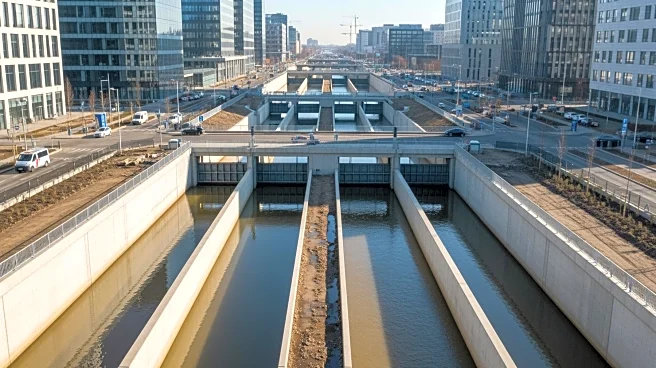
A significant development in flood management was marked in Tel Aviv with the activation of two giant floodgates at Ariel Sharon Park. This marks the first operational phase of Israel's largest drainage project, designed to manage floodwaters from the Ayalon
Stream and surrounding areas. The project, which began construction in 2021, involves a complex system of six gates that will regulate water flow into controlled holding basins. These basins are capable of holding up to six million cubic meters of water, significantly reducing the risk of flooding in the Dan region, including Tel Aviv and areas near Ben Gurion Airport. The project is a response to increasingly frequent intense rainfall events attributed to climate change.
Why It's Important?
The flood control project is crucial for safeguarding central Israel from the adverse effects of climate change, which has led to more frequent and intense rainfall. By managing floodwaters effectively, the project aims to protect urban infrastructure and reduce potential damage to residential and commercial areas. This initiative not only enhances public safety but also supports continued urban development in the region. The ability to control flood events rather than react to them represents a significant advancement in Israel's infrastructure resilience, potentially serving as a model for other regions facing similar challenges.
What's Next?
The initial operation of the drainage channels is expected to commence in early March, contingent on weather conditions. As the project progresses, authorities will monitor its effectiveness in managing flood events and make necessary adjustments. The success of this project could lead to further investments in similar infrastructure across Israel, enhancing the country's overall flood management capabilities. Stakeholders, including urban planners and environmental agencies, will likely evaluate the project's impact on local ecosystems and urban development.
Beyond the Headlines
This project highlights the growing need for innovative infrastructure solutions in response to climate change. The integration of advanced engineering techniques in flood management reflects a broader trend towards sustainable urban planning. Additionally, the project underscores the importance of cross-disciplinary collaboration between engineers, environmental scientists, and policymakers to address complex environmental challenges. As climate change continues to impact weather patterns globally, such initiatives may become increasingly common, emphasizing the need for proactive rather than reactive approaches to environmental management.