







What's Happening?
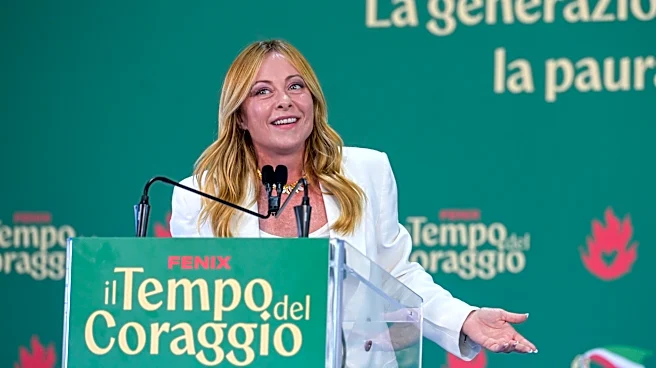
Italian Prime Minister Giorgia Meloni has announced upcoming measures to ban face coverings, specifically burqas and niqabs, in Italian schools and to establish a maximum number of foreign students per class. Speaking at an annual gathering of her Brothers
of Italy party's youth wing, Meloni stated that a measure will soon be presented to a Cabinet meeting to legally implement these changes. The proposal also includes a requirement for parents of foreign students facing integration difficulties to learn Italian. Meloni emphasized that if a large number of children in a class do not understand Italian, it hinders integration and can lead to neglect. She asserted that students must attend school with their faces uncovered, and no one in Italy can dictate that a young woman must hide herself based on tradition. The specific limit on foreign students per class was not disclosed. According to Fondazione ISMU, a research institution, noncitizens currently constitute 11.6% of students enrolled in Italian schools. Italy's geographical position in the central Mediterranean makes it a primary destination for migrant arrivals.
Why It's Important?
These proposed measures by Prime Minister Meloni reflect a broader European trend of addressing immigration and cultural integration within national borders. While the immediate impact is on Italy's educational system and immigrant communities, such policies can influence international discussions on multiculturalism, national identity, and human rights. For the U.S., these developments in a key European ally could inform policy debates on immigration, particularly regarding the integration of diverse populations and the role of cultural assimilation versus multiculturalism. The emphasis on learning the national language and adhering to specific cultural norms in schools could resonate with certain political factions in the U.S. that advocate for similar approaches to immigrant integration. Furthermore, the ban on face coverings touches upon religious freedom and secularism, issues that are frequently debated in the U.S. context. The policies could also set a precedent or contribute to a growing sentiment in Western nations regarding the management of migrant populations and the preservation of national cultural identities.
What's Next?
The proposed measure will be presented to the Italian Cabinet for legal establishment. Following Cabinet approval, it would likely proceed through the legislative process, potentially facing parliamentary debate and votes. The implementation of these policies would necessitate the development of clear guidelines for schools regarding the maximum number of foreign students per class and the enforcement of the face-covering ban. There could be reactions from various stakeholders, including immigrant communities, human rights organizations, and international bodies, potentially leading to protests or legal challenges. The Italian government would also need to establish programs or resources to support parents of foreign students in learning Italian, as mandated by the proposed measure. The long-term effects on student integration, academic performance, and social cohesion within Italian schools will be closely monitored. The specific limit on foreign students per class, once announced, will be a critical detail determining the practical impact of the policy.
Beyond the Headlines
The proposed ban on face coverings and limits on foreign students in Italian schools delve into complex societal and ethical considerations beyond immediate policy implementation. Ethically, the ban on burqas and niqabs raises questions about religious freedom and individual autonomy, particularly for women who choose to wear such coverings as an expression of their faith. Critics might argue that such bans infringe upon fundamental human rights and could lead to discrimination. Conversely, proponents might frame it as a measure to promote gender equality, security, and integration into a secular society. The limitation on foreign students per class, while framed as an integration tool, could also be seen as potentially segregating students or creating barriers to educational access for immigrant children. This policy could trigger broader discussions about the role of public education in fostering national identity versus accommodating cultural diversity. The long-term societal shift could involve a redefinition of Italian national identity in the face of increasing immigration, potentially leading to a more assimilationist approach to multiculturalism. This could also influence how other European nations, grappling with similar demographic shifts, approach their own integration policies.