





What's Happening?
The Pentagon has signed framework agreements with Northrop Grumman and Lockheed Martin to significantly increase the production of missile-defense systems. The agreements aim to quadruple the output of Terminal High Altitude Area Defense (THAAD) interceptor
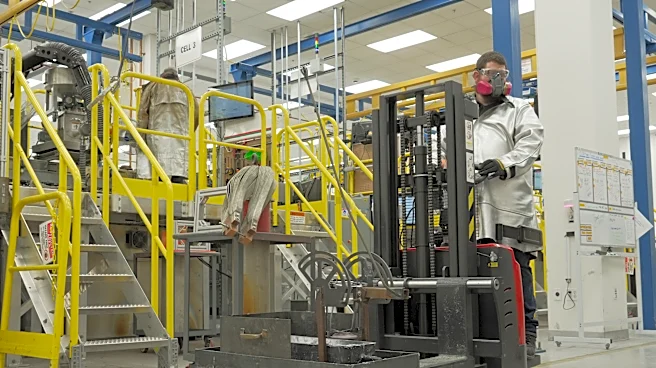
components and triple the production of Patriot Advanced Capability-3 (PAC-3) systems. This move is part of a broader strategy to enhance the U.S. defense capabilities. Northrop Grumman has entered into deals worth $3 billion, including a $2 billion agreement for rocket motors and safety devices, and a $1 billion agreement to increase THAAD component deliveries. The agreements are designed to provide suppliers with long-term demand commitments, enabling investments in tooling, facility upgrades, and workforce development.
Why It's Important?
This development is crucial for maintaining the U.S. military's technological edge in missile defense. By increasing production capacity, the Pentagon aims to ensure a robust supply chain and reduce risks associated with reliance on a single supplier. The agreements also reflect a strategic shift towards enhancing the U.S. defense posture amid global threats. The increased production will support U.S. Army plans to boost annual PAC-3 missile production, which is vital for both national defense and fulfilling commitments to allied countries. This move could also stimulate economic activity in the defense sector, potentially leading to job creation and technological advancements.
What's Next?
The Pentagon's agreements with Northrop Grumman and Lockheed Martin are expected to lead to significant investments in manufacturing technologies and supply chain resilience. As production ramps up, the focus will likely shift to ensuring timely delivery and integration of these systems into the U.S. defense infrastructure. The agreements may also prompt other defense contractors to seek similar deals, potentially leading to increased competition and innovation in the sector. Additionally, the U.S. government may continue to explore further enhancements to its missile defense capabilities in response to evolving global security challenges.