





What's Happening?
Virginia's residential building code has not strengthened its key energy efficiency provisions in over a decade and a half, falling significantly behind national model standards. The state's Board of Housing and Community Development (BHCD) is set to
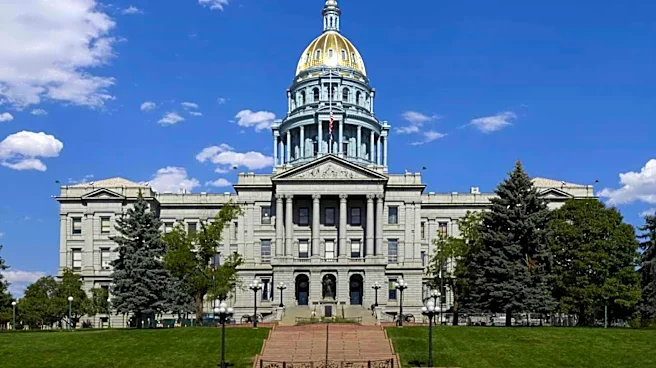
propose an updated building code with efficiency standards that are even less stringent than the 2012 edition of the International Energy Conservation Code (IECC). This means new homes in Virginia are being built to lower standards compared to states like Maryland, which regularly adopts the latest IECC. Despite legislative efforts in the last ten years to push for stronger energy conservation standards, including a 2021 act requiring the BHCD to consider amendments at least as stringent as the latest IECC, the board has consistently failed to adopt them. Activists and attorneys involved in the BHCD process attribute this failure to a requirement for 'consensus,' which the board interprets as unanimity, effectively allowing builder interests to block more stringent energy conservation provisions.
Why It's Important?
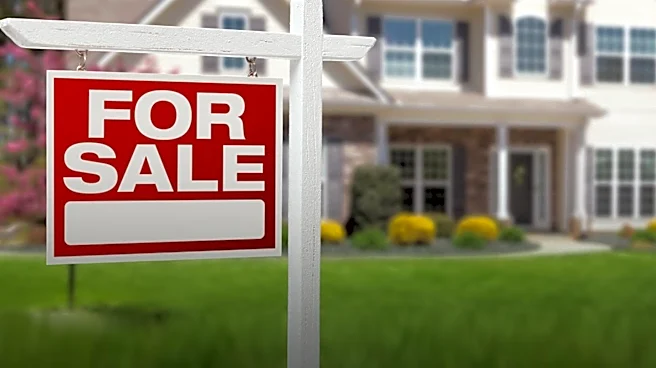
The failure to update Virginia's building codes to modern energy efficiency standards has significant financial implications for homeowners. While builders may save on initial construction costs, these savings are rarely passed on to buyers, who instead face tens of thousands of dollars in higher energy bills over the life of their mortgage for heating, cooling, and powering less efficient homes. This issue disproportionately affects entry-level buyers and low-income communities, as homes built to lower standards are less affordable in the long run due to increased operational costs. The current situation also creates a disparity where companies like Habitat for Humanity and Viridiant, serving low-income communities, voluntarily adopt higher energy efficiency standards (EarthCraft or Energy Star) that exceed the state's code, recognizing that true affordability includes manageable utility costs. The state's energy plan acknowledges the potential for billions in energy cost savings from adopting modern building codes but has yet to mandate this path, leaving a significant gap in its energy affordability agenda.
What's Next?
The Virginia Board of Housing and Community Development is expected to hold a final vote in December on proposed code amendments that, according to reports, will again fall short of even the 2012 IECC standards. These 'updates' are slated to take effect in 2028. There is an ongoing call for the governor to intervene, as the state's energy plan highlights the importance of home efficiency and the potential for substantial energy cost savings through updated building codes. However, the plan currently does not explicitly mandate the adoption of the latest model building codes. Stakeholders, including efficiency advocates, will likely continue to pressure the BHCD and state leadership to prioritize long-term energy affordability and environmental benefits over short-term construction cost concerns, potentially leading to further legislative or regulatory debates on the interpretation and enforcement of energy conservation mandates.
Beyond the Headlines
The persistent resistance to adopting higher energy efficiency standards in Virginia's building code reveals a deeper tension between immediate construction costs and long-term consumer welfare and environmental goals. The argument that higher standards make homes too expensive for entry-level buyers overlooks the total cost of homeownership, which includes ongoing utility expenses. This perspective prioritizes the interests of builders, who benefit from lower upfront costs, over the financial well-being of homeowners and the broader societal benefits of reduced energy consumption and carbon emissions. The situation also highlights a potential democratic deficit, where legislative intent to raise standards is undermined by a board's interpretation of procedural rules, effectively allowing a minority of interests to block progress. This dynamic raises questions about governance, accountability, and the influence of industry lobbies on regulatory bodies, suggesting a need for greater transparency and public participation in code-setting processes to ensure that public health, safety, and welfare, including energy conservation, are adequately prioritized.