






What's Happening?
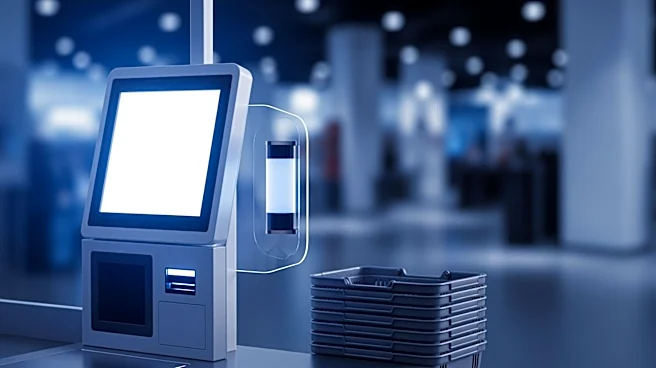
Several U.S. states, including California, Connecticut, Massachusetts, New York, Ohio, Rhode Island, and Washington, are considering legislation to impose stricter regulations on self-checkout systems in grocery and convenience stores. These proposed
laws aim to balance the number of employee-manned and self-checkout stations, limit the number of items processed through self-checkouts, and ensure adequate staffing to assist customers. The move is driven by concerns over increased shoplifting incidents associated with self-checkout systems. A study by Capital One Shopping Research indicates that theft rates at self-checkouts are significantly higher compared to traditional checkouts. While no state has yet passed such legislation, discussions and proposals are ongoing at both state and municipal levels.
Why It's Important?
The push for stricter self-checkout regulations highlights the challenges retailers face in balancing convenience with security. As self-checkout systems become more prevalent, the potential for theft increases, posing financial risks to businesses. By implementing regulations that require a mix of self-service and employee-assisted checkouts, states aim to reduce theft while maintaining customer convenience. This legislative trend could lead to significant changes in retail operations, impacting how businesses allocate resources and manage customer interactions. Retailers may need to invest in additional staffing or technology to comply with new regulations, potentially affecting their operational costs and pricing strategies.
What's Next?
As discussions around self-checkout regulations continue, retailers and industry stakeholders are likely to engage with lawmakers to shape the final form of these laws. Businesses may advocate for solutions that balance security with operational efficiency, such as enhanced surveillance or advanced theft-detection technologies. The outcome of these legislative efforts could set a precedent for other states considering similar measures. Retailers will need to monitor developments closely and prepare to adapt their operations to comply with any new regulations. The ongoing dialogue may also prompt further innovation in self-checkout technology to address security concerns while preserving the benefits of automation.