
What's Happening?
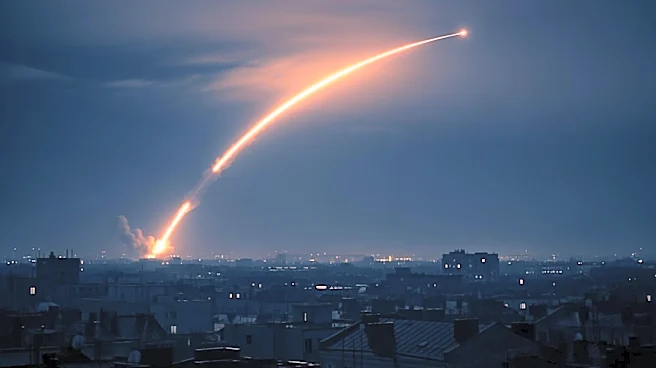
Reports indicate that Russia has launched an Oreshnik intermediate-range ballistic missile at Bila Tserkva in Kyiv Oblast, Ukraine. This missile system can release up to six hypersonic warheads, each capable
of striking separate targets. Residents reported hearing a loud explosion followed by smaller blasts, described as metal scattering in the air. This attack is part of a larger missile assault on Kyiv, with at least 16 missiles launched. Ukrainian President Volodymyr Zelenskyy had previously warned of such an attack, citing intelligence from U.S. and European partners. This marks the third use of the Oreshnik missile against Ukraine, following previous strikes in Dnipro and Lviv.
Why It's Important?
The use of the Oreshnik missile by Russia represents a significant escalation in the ongoing conflict with Ukraine. The missile's ability to deliver multiple hypersonic warheads poses a severe threat to Ukrainian infrastructure and civilian safety. This development could further strain international relations and prompt a response from global powers, potentially leading to increased military support for Ukraine. The attack underscores the volatility of the region and the potential for further escalation, impacting global security and economic stability. It also highlights the challenges in intercepting advanced missile systems, raising concerns about defense capabilities.
What's Next?
The international community is likely to respond to this escalation with diplomatic and possibly military measures. Ukraine may seek additional support from NATO and other allies to bolster its defense systems. The attack could lead to increased sanctions against Russia and calls for renewed peace negotiations. Monitoring the situation will be crucial as further developments could influence global geopolitical dynamics. The potential for retaliatory actions or further military engagements remains high, necessitating careful diplomatic efforts to prevent a broader conflict.