




What's Happening?
Ohio Governor Mike DeWine has voiced concerns about the economic impact of Haitian immigrants losing their legal work authorization, particularly in Springfield, Ohio. He warned that the loss of this workforce jeopardizes businesses relying on immigrant labor,
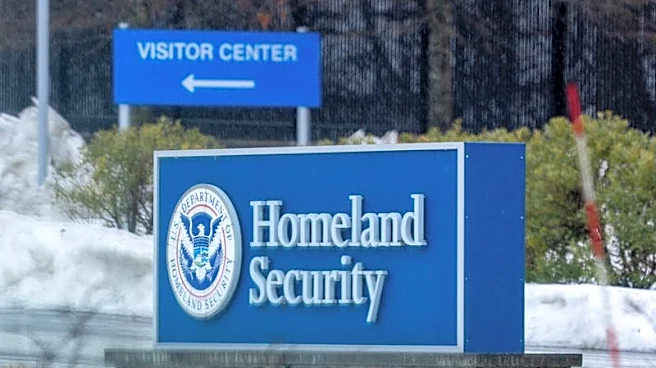
local tax revenues, and regional supply chains. Governor DeWine highlighted that immigrants and native-born Ohioans are collectively building a stronger economy, and he criticized the approach of deporting hard-working individuals and restricting future talent, stating it threatens to derail economic momentum. This stance contrasts with comments from U.S. Senator Jon Husted and U.S. Senator Bernie Moreno, who expressed little concern about Springfield's economy despite the loss of the Haitian workforce. Moreno, a critic of protected status for immigrants, stated that jobs would go to American citizens, anticipating an economic 'bonanza.' Approximately 12,000 to 15,000 Haitian immigrants were living in Springfield in 2024, a city with a population under 60,000, before the U.S. Department of Homeland Security terminated their protected status.
Why It's Important?
The differing views among Ohio's political leaders on the economic role of immigrant labor underscore a significant national debate regarding immigration policy and its impact on local economies. Governor DeWine's concerns highlight the tangible contributions of immigrant communities to specific industries and local tax bases, suggesting that restrictive immigration policies can have immediate and negative economic consequences. The situation in Springfield, where a substantial portion of the workforce was composed of Haitian immigrants, serves as a case study for how changes in immigration status can disrupt labor markets and local economies. This issue is particularly relevant for businesses that have come to rely on immigrant labor, as they may face labor shortages and increased operational costs. The debate also touches upon broader societal implications, including the integration of immigrant communities and the economic vitality of smaller cities and towns across the U.S.
What's Next?
The termination of protected status for Haitian immigrants means that thousands in Ohio have lost their legal ability to work, which could lead to significant labor shortages in sectors that previously relied on them. Businesses in Springfield and other affected areas will likely need to find alternative labor sources, potentially impacting their operations and profitability. The economic downturn predicted by Governor DeWine could manifest in reduced local tax revenues and disruptions to regional supply chains. The contrasting opinions among state officials suggest that there will be ongoing political debate regarding immigration policy and its economic effects. Local advocates may continue to push for policies that support immigrant workers, while others may advocate for stricter enforcement of immigration laws. The situation could also lead to increased social services demand as individuals lose their livelihoods.
Beyond the Headlines
This situation reveals a deeper tension between national immigration policies and local economic realities. While federal policies dictate immigration status, the economic consequences are often felt most acutely at the local level, where communities have integrated immigrant labor into their economies. The debate also highlights the ethical considerations surrounding the deportation of individuals who have been contributing to the U.S. economy for years. It prompts questions about the long-term economic strategy for regions that have benefited from immigrant workforces and how to balance national security concerns with economic stability and humanitarian considerations. The experience of Springfield could serve as a model for understanding the broader implications of immigration policy changes on diverse communities and industries across the country, potentially influencing future policy discussions and advocacy efforts.