


What's Happening?
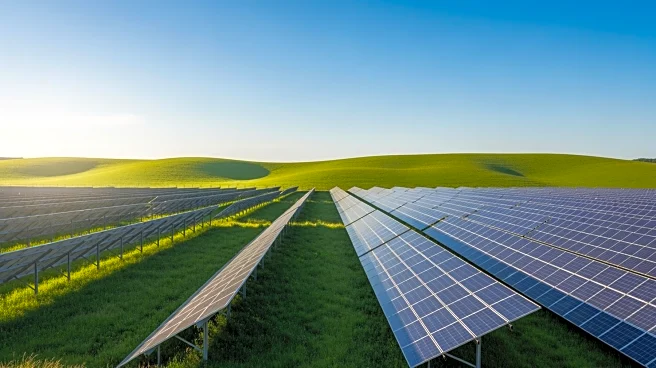
South Africa's state-owned power utility, Eskom, attempted to block a solar power project by Sibanye Stillwater, the country's largest gold producer. The project involved building a 50MW solar photovoltaic plant to power one of its mines, which would
reduce reliance on the national grid and decrease greenhouse gas emissions. Eskom refused to allow the mine's solar power lines to cross its servitude, despite granting other necessary approvals. Sibanye Stillwater took the matter to court, arguing that Eskom's refusal was unlawful. In February 2026, the Gauteng Division of the High Court ruled in favor of the mining company, allowing the solar project to proceed.
Why It's Important?
This court ruling is significant as it sets a precedent for other companies seeking to develop renewable energy projects in South Africa. It highlights the challenges faced by private entities in overcoming resistance from powerful institutions like Eskom, which has historically operated as a near-monopoly. The decision supports the country's energy transition goals by encouraging private investment in renewable energy, which is crucial for reducing the national grid's pressure and lowering carbon emissions. The ruling also underscores the role of the judiciary in ensuring that public bodies act lawfully and do not hinder progress towards sustainable energy solutions.
What's Next?
Following the court's decision, Sibanye Stillwater can proceed with its solar project, potentially inspiring other mining companies and large corporations to pursue similar renewable energy initiatives. This could lead to increased private investment in South Africa's energy sector, contributing to the country's efforts to diversify its energy sources and reduce its dependence on coal. The ruling may also prompt Eskom to reconsider its approach to renewable energy projects and align more closely with national energy policies that support decentralization and private sector involvement.