






What's Happening?
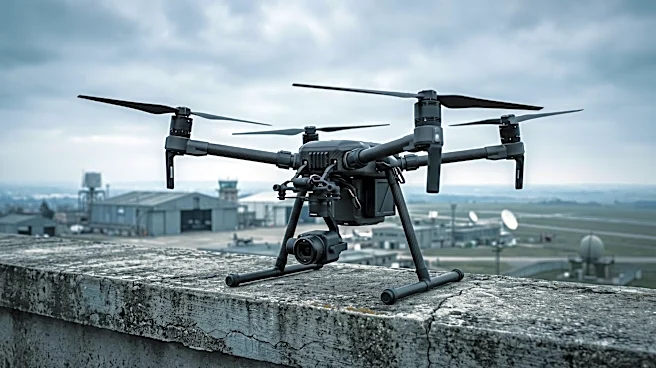
The European Union is set to establish two new drone technology hubs in Latvia and the Netherlands by 2027, leveraging Ukrainian battlefield experience to enhance Europe's drone production capabilities. This initiative is part of the EU's DECODER defense
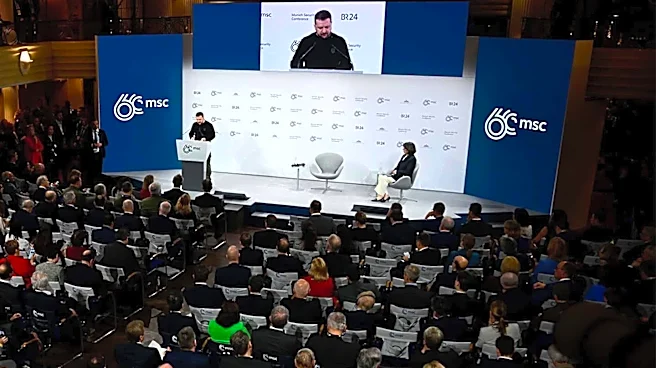
project, which includes non-EU members Ukraine and Norway. Valdis Dombrovskis, the EU's Economy Commissioner, announced this development at NATO's FUSE event in Riga. He emphasized that Ukraine's 'hard-won battlefield experience' will be crucial in accelerating innovation and strengthening European drone systems. Additionally, the EU plans to sign a Defense Industry Pact with Ukraine by the end of 2026. This pact aims to facilitate joint ventures, technology transfer, and integrate Ukraine's defense industry into Europe's defense technological and industrial base. The announcement follows the establishment of an EU-Ukraine drone alliance, a forum designed to connect drone manufacturers from both regions.
Why It's Important?
This development signifies a strategic shift in European defense, prioritizing the integration of real-world combat experience from Ukraine into its technological advancements. For the U.S., this initiative underscores the growing importance of drone technology in modern warfare and the need for rapid adaptation cycles, as highlighted by Admiral Giuseppe Cavo Dragone at NATO's FUSE event. The collaboration could lead to more sophisticated drone and counter-drone systems, potentially influencing U.S. defense strategies and procurement. The integration of Ukraine's defense industry into Europe's base could also create new market dynamics for defense contractors and technology providers, impacting global defense supply chains. Furthermore, the emphasis on interoperability and accelerated capability development within NATO, as demonstrated by the FUSE event, suggests a broader trend towards collaborative defense innovation that the U.S. will need to monitor and potentially engage with.
What's Next?
The two drone technology hubs are slated for establishment in Latvia and the Netherlands by 2027. Before then, the EU aims to finalize and sign the EU-Ukraine Defense Industry Pact by the end of 2026. This pact will lay the groundwork for deeper collaboration, including joint ventures and technology transfers. NATO will continue to assess the findings from its FUSE operational experimentation in Latvia, identifying challenges and determining next steps with Allied nations, operators, and industry. The focus will be on developing a robust sensor-to-shooter chain against drone swarms that can operate across multiple nations' systems and be deployed with units on the eastern flank. These ongoing efforts will likely lead to further integration of emerging technologies and capabilities within the Alliance.
Beyond the Headlines
The initiative highlights a broader recognition within the EU and NATO that traditional defense adaptation cycles are too slow for the rapidly evolving nature of modern warfare, particularly concerning drone technology. The direct incorporation of Ukraine's battlefield insights represents a pragmatic approach to defense innovation, moving beyond theoretical development to practical application. This could set a precedent for future defense collaborations, where real-time combat experience from conflict zones directly informs technological development. The emphasis on integrating Ukraine's defense industry also suggests a long-term strategic commitment to strengthening European security, potentially reshaping geopolitical alliances and defense postures in the region. This could also raise ethical considerations regarding the rapid development and deployment of autonomous or semi-autonomous drone systems, and the implications for international law and accountability in warfare.