


What's Happening?
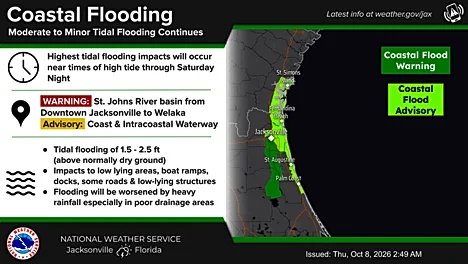
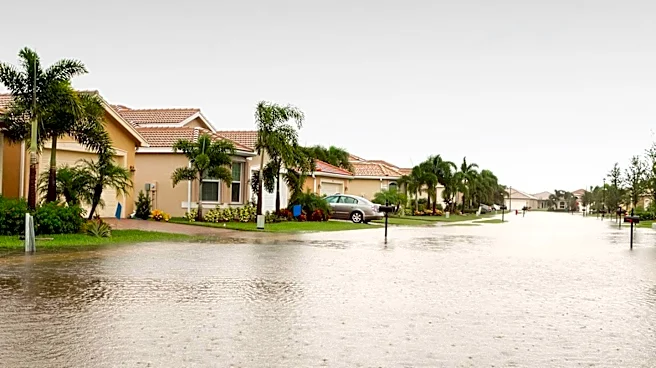
The Ribault River in Jacksonville, Florida, rose to the level of homes along Ken Knight Drive, with floodwaters entering yards and driveways. This event occurred as a Flood Watch and Coastal Flood Advisory were in effect for Duval County, with 1 to 3
inches of additional rain falling on already saturated ground. Residents, like Latasha Howard, expressed nervousness due to persistent rain causing roof leaks and concerns about water entering their homes. City Council member Ju'Coby Pittman advised residents to follow emergency advisories and prepare for potential temporary relocation. The area has a history of severe flooding during storms, including Hurricane Irma in 2017 and Hurricane Nicole in 2022, which led to residents being trapped and homes being inundated. The flooding is attributed to the Ribault River being a tidally influenced tributary where high tides prevent rainwater from draining into the St. Johns River, creating a hydrological trap.
Why It's Important?
The recurring flooding in the Ken Knight Drive area highlights a significant and ongoing challenge for urban planning and climate resilience in coastal communities. The inability to implement structural fixes like seawalls due to legal and technical infeasibility, coupled with the impracticality of elevating older homes, underscores the complex nature of addressing climate change impacts in established neighborhoods. This situation forces the city to consider long-term solutions such as voluntary buyouts, which have profound social and economic implications for affected residents. The repeated displacement and property damage not only cause financial hardship but also create psychological stress and community disruption, emphasizing the need for comprehensive and sustainable strategies to protect vulnerable populations from environmental hazards.
What's Next?
Jacksonville city officials are continuing to pursue voluntary buyouts as a long-term response to the persistent flooding along Ken Knight Drive. This initiative aims to relocate residents from the most vulnerable properties, acknowledging that structural solutions are not viable. Residents in the area are advised to remain vigilant and follow emergency management advisories, preparing for potential evacuations as weather patterns continue to bring heavy rainfall. The ongoing efforts will likely involve continued engagement with residents regarding buyout options and support for relocation. The situation also underscores the broader need for cities to develop and implement adaptive strategies for communities facing increasing climate-related risks, particularly in low-lying coastal areas.
Beyond the Headlines
The situation in Ken Knight Drive reveals a deeper societal challenge concerning environmental justice and the equitable distribution of climate change impacts. Many homes in the affected area are older, suggesting that long-standing communities, often with limited resources, bear a disproportionate burden of environmental hazards. The city's conclusion that structural fixes are unfeasible and that buyouts are the primary long-term solution raises questions about the responsibility of local governments to protect their citizens from predictable environmental threats. This scenario could set precedents for how other U.S. cities address similar challenges, potentially leading to increased reliance on managed retreat strategies and the need for robust social support systems to assist displaced communities. It also highlights the ethical considerations involved in urban development and resilience planning in the face of a changing climate.