
What's Happening?
The Organization of the Petroleum Exporting Countries (OPEC) has experienced a significant decline in crude oil production, reaching a 36-year low due to the ongoing conflict involving Iran. According
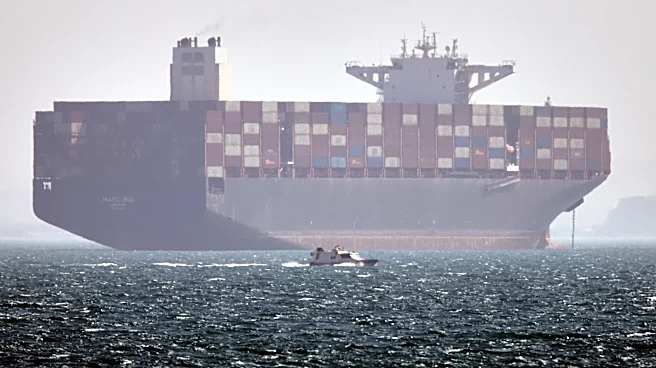
to a Bloomberg survey, OPEC's output fell by 420,000 barrels per day (bpd) to 20.55 million bpd in April. This reduction is primarily attributed to substantial production losses in Kuwait and Iran. The conflict has severely disrupted exports from the Persian Gulf, particularly following the closure of the Strait of Hormuz, a critical chokepoint for global oil shipments. The situation has led to increased prices for jet fuel, diesel, and gasoline, raising concerns about potential inflation and a global economic recession. The United Arab Emirates' recent decision to exit OPEC further complicates the situation, as it reflects internal tensions within the organization.
Why It's Important?
The decline in OPEC's oil production has significant implications for the global economy, particularly in terms of energy prices and supply stability. The disruption in the Persian Gulf, one of the largest oil-market disruptions in history, threatens to exacerbate inflationary pressures worldwide. Higher fuel prices could lead to increased costs for transportation and goods, affecting consumers and businesses alike. The potential for a global recession looms as energy costs rise, impacting economic growth and stability. Additionally, the internal dynamics within OPEC, highlighted by the UAE's departure, may lead to further instability in oil production agreements, affecting global oil markets and energy policies.
What's Next?
As the conflict continues, stakeholders are closely monitoring diplomatic efforts to resolve the situation. The U.S. has been actively involved, with reports suggesting an imminent agreement could be reached. However, the ongoing U.S. blockade on Iranian shipments and the redirection of vessels indicate that tensions remain high. OPEC and its allies have agreed to a symbolic increase in output quotas for June, but the effectiveness of this measure in stabilizing the market remains uncertain. The global community will be watching for any developments that could lead to a resolution of the conflict and a stabilization of oil supplies.