







What's Happening?
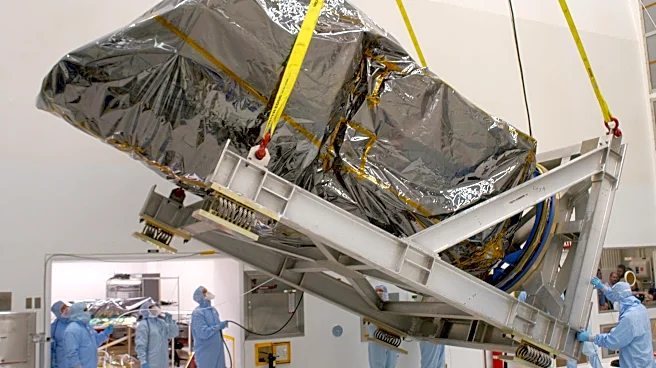
NASA's Swift Observatory, a premier space telescope that spent 22 years studying cosmic explosions, plunged back to Earth on Wednesday, concluding its mission with a fiery reentry over Indonesia. The U.S. Space Force confirmed Swift's reentry near Indonesia after
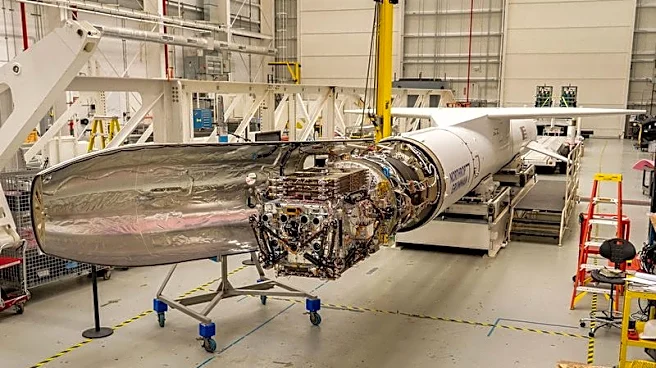
tracking its sinking orbit, which was influenced by intense solar activity over the past few years. This event occurred less than three months after a long-shot rescue mission, involving a private company's robotic craft, failed to boost the satellite's orbit. Swift, launched in 2004, was initially expected to operate for two years but far exceeded its planned lifespan, observing thousands of gamma-ray bursts and exploding stars.
Why It's Important?
The Swift Observatory's extended mission provided invaluable data on gamma-ray bursts and other high-energy cosmic phenomena, significantly advancing our understanding of the universe's most powerful explosions. Its demise marks the end of a highly successful scientific endeavor that contributed substantially to astrophysics. For the U.S. space program, the event highlights the challenges of maintaining aging space assets and the increasing impact of space weather on orbital mechanics. The failed rescue mission also underscores the complexities and risks associated with in-orbit servicing, an area of growing interest for extending the life of valuable satellites. The loss of Swift emphasizes the continuous need for new observational instruments to replace and enhance existing capabilities.
What's Next?
While Swift's mission has concluded, NASA is actively exploring options for another aging observatory, the Hubble Space Telescope, whose orbit is also being affected by solar storms. The agency is seeking input from private companies on potential rescue missions for Hubble, which could involve boosting its orbit, upgrading its systems, or guiding it to a controlled reentry by 2032. Unlike the Swift situation, NASA has more time to plan for Hubble's future. The lessons learned from Swift's reentry and the failed rescue attempt will likely inform future strategies for managing and deorbiting space assets, as well as developing more robust in-orbit servicing capabilities.
Beyond the Headlines
The controlled (or in this case, tracked) reentry of satellites like Swift is becoming an increasingly important aspect of space sustainability. As Earth's orbit becomes more crowded, managing the end-of-life for spacecraft is crucial to prevent the creation of hazardous space debris. The Swift event serves as a reminder of the finite lifespan of even the most robust space instruments and the need for responsible space stewardship. It also highlights the evolving role of private companies in providing specialized services, such as in-orbit repair and deorbiting, which are becoming essential for the long-term viability of space operations. The scientific legacy of Swift will continue to be analyzed, contributing to future discoveries.