





What's Happening?
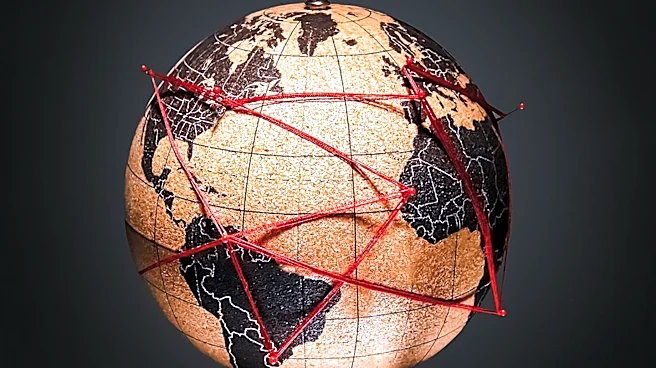
The global order is currently characterized by fragmentation and contestation, moving away from a unipolar system. This shift is marked by the rise of China and other middle powers, particularly from the Global South. The U.S.-led global order is perceived
by some as having failed to deliver on economic development and respect for sovereignty, prompting states to seek alternative institutions and alliances. China views the collapse of the post-Cold War international system as an indicator of its own ascent and America’s decline, advocating for a new global order that better reflects these changing power dynamics. Middle powers, rather than actively seeking to reshape the global order, are prioritizing resilience and flexibility in their foreign policies, often engaging in 'forum shopping' for pragmatic reasons. This pragmatic approach is driven by immediate needs and a desire to navigate an increasingly complex international landscape without committing to a single dominant power.
Why It's Important?
This fragmentation of the global order has significant implications for U.S. foreign policy and international relations. The decline of unipolarity challenges the traditional leadership role of the United States, requiring a re-evaluation of its engagement strategies. The rise of middle powers and their pragmatic, multi-aligned approaches mean that the U.S. can no longer assume automatic allegiance or adherence to its preferred international norms. This shift could lead to a more complex and less predictable global environment, where securing international cooperation on critical issues like trade, security, and climate change may become more challenging. Economically, the increasing influence of countries like China and India, and their growing trade relationships with the Global South, could alter global supply chains and economic partnerships, potentially impacting U.S. economic interests and influence. The U.S. may need to offer more attractive and immediate incentives to secure partnerships, as value-based arguments are becoming a harder sell.
What's Next?
In response to this evolving global landscape, the U.S. will likely need to adapt its diplomatic and economic strategies. This could involve developing more flexible and tailored engagement approaches with middle powers, acknowledging their desire for strategic autonomy. There may be an increased focus on competitive offerings, both economic and security-related, to counter the influence of rising powers like China. Discussions around the future of global governance will continue, with a potential for new multilateral institutions or reformed existing ones that better accommodate the interests of a multipolar world. The U.S. may also need to address the perceptions of its past failures in economic development and sovereignty respect to rebuild trust and legitimacy among some nations. The emphasis on resilience and flexibility by middle powers suggests that short-term, tangible benefits will likely outweigh long-term ideological alignments in many international relationships.
Beyond the Headlines
The shift in the global order extends beyond immediate geopolitical and economic concerns, touching upon deeper ethical and philosophical dimensions. The questioning of the U.S.-led order highlights a broader debate about the universality of Western liberal democratic values and institutions. The pragmatic approach of middle powers, prioritizing resilience and immediate needs over ideological alignment, suggests a re-evaluation of the role of values in international relations. This could lead to a more transactional global environment, where alliances are formed based on specific interests rather than shared principles. The decline of a single dominant power also opens up opportunities for diverse perspectives and alternative models of governance to gain prominence, potentially leading to a richer, albeit more complex, tapestry of international norms and practices. This evolution challenges the very notion of a singular 'global order' and points towards a future characterized by multiple, coexisting, and sometimes competing, regional and thematic orders.