
What's Happening?
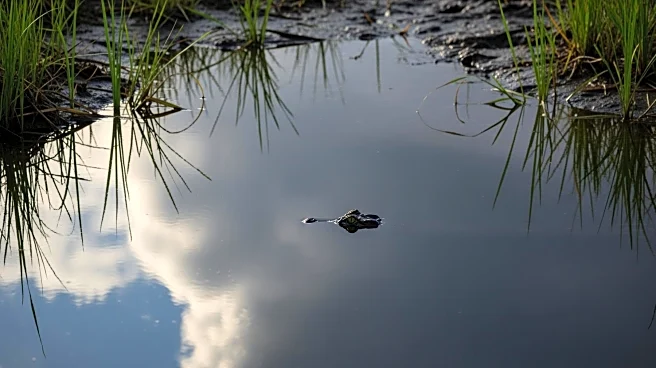
Severe flooding in Mozambique has resulted in crocodiles entering urban areas, causing at least three deaths. The floods, which have affected Mozambique, South Africa, and Zimbabwe, have killed over 100
people and displaced thousands. In Xai-Xai, authorities have warned residents about the increased risk of crocodile attacks as floodwaters rise. The floods have also caused significant damage to infrastructure, including roads, bridges, and health facilities, exacerbating the humanitarian crisis. The World Health Organization has raised concerns about disruptions to health services and the risk of water-borne diseases.
Why It's Important?
The flooding in Mozambique highlights the vulnerability of regions to extreme weather events and the compounded risks of wildlife encounters. The situation underscores the need for effective disaster management and preparedness strategies to mitigate the impact of natural disasters. The destruction of infrastructure and health facilities poses significant challenges to recovery efforts and public health. The international community's response, including humanitarian aid and support for rebuilding efforts, will be crucial in addressing the immediate needs and long-term recovery of affected communities.
What's Next?
Efforts to address the immediate humanitarian needs, including providing shelter, food, and medical care, will be a priority. The government and international organizations may focus on rebuilding infrastructure and restoring essential services. Long-term strategies to improve disaster resilience and climate adaptation will be critical to prevent future crises. The situation may prompt discussions on regional cooperation and support for countries vulnerable to climate-related disasters, emphasizing the importance of sustainable development and environmental management.