







What's Happening?
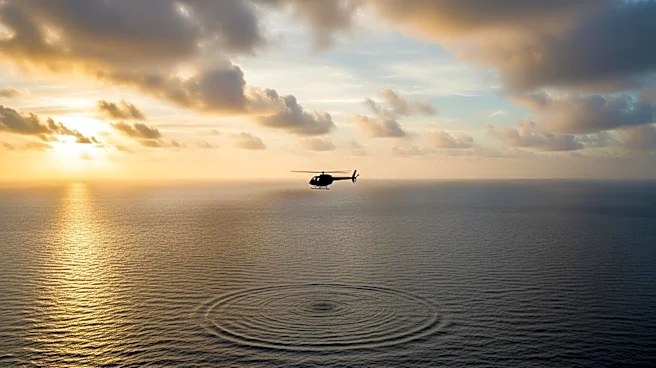
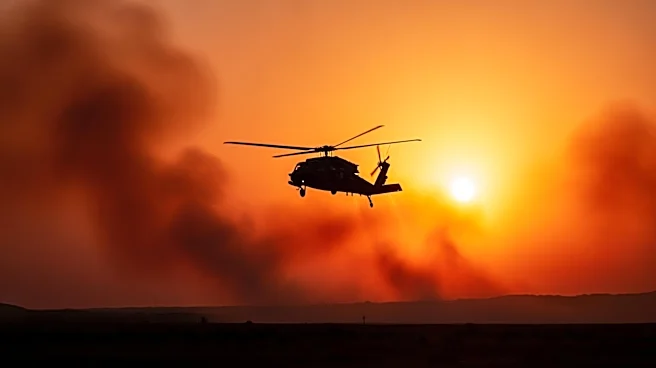
President Trump has accused Iran of shooting down a U.S. Apache helicopter in the Strait of Hormuz. According to Trump's statement on his Truth Social platform, the incident occurred while the helicopter was patrolling the area. Both pilots involved in the incident were
reported to be safe and uninjured. Trump emphasized the necessity for the United States to respond to this attack, although specific details of the potential response were not disclosed. This development adds to the ongoing tensions between the U.S. and Iran, particularly in the strategically significant Strait of Hormuz, a vital waterway for global oil shipments.
Why It's Important?
The incident underscores the fragile state of U.S.-Iran relations and the potential for escalation in a region critical to global energy supplies. The Strait of Hormuz is a chokepoint through which a significant portion of the world's oil passes, and any military conflict in this area could disrupt global oil markets, leading to increased prices and economic instability. The U.S. response to this incident could further strain diplomatic relations and impact international efforts to manage tensions in the Middle East. Stakeholders in the energy sector, as well as geopolitical analysts, will be closely monitoring the situation for any signs of escalation.
What's Next?
The U.S. government is likely to deliberate on its response strategy, balancing the need to assert military strength with the risks of further escalation. Diplomatic channels may be engaged to de-escalate tensions, while military readiness in the region could be heightened. Allies and partners of the U.S. may also be consulted to coordinate a collective response. The international community will be watching for any official statements or actions from both the U.S. and Iran that could indicate the direction of future relations.