






What's Happening?
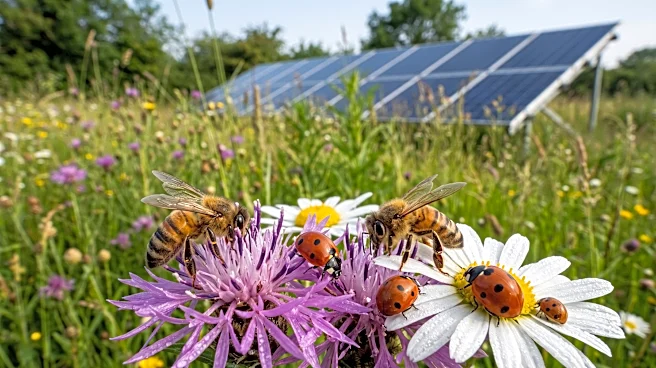
An American bumblebee, classified as a Species of Conservation Concern, was observed in July within a native plant garden in Springfield, Missouri. This sighting occurred during an Urban Pollinator Survey conducted by staff from the Missouri Department
of Conservation (MDC) across several gardens in the city. The specific garden where the bumblebee was found participates in the City of Springfield Environmental Services' Yard Ethic program, which promotes sustainable yard care practices. After observation, the MDC staff released the bumblebee. The American bumblebee, once common across the eastern United States, has experienced a drastic decline in its population, with numbers decreasing by nearly 90 percent in North America between 2000 and 2020, primarily due to human activities.
Why It's Important?
This observation is significant because it highlights the critical role that small urban gardens and local conservation programs play in providing habitat for declining native species. The presence of an American bumblebee in a Yard Ethic-certified garden underscores the effectiveness of encouraging residents to adopt sustainable practices that benefit local ecosystems. The drastic decline of the American bumblebee population has broader ecological implications, as bumblebees are vital pollinators for many plants, including agricultural crops. Their disappearance can lead to reduced biodiversity and impact food security. This sighting serves as a tangible example of how individual and community-level efforts can contribute to conservation, even in urban environments.
What's Next?
The Missouri Department of Conservation will continue to track sensitive species like the American bumblebee through its annual Species and Communities of Conservation Concern Checklist. The City of Springfield Environmental Services will likely continue to promote and expand its Yard Ethic program, encouraging more residents and businesses to adopt practices that create healthier habitats and improve water quality. This observation may also lead to increased public awareness and support for pollinator conservation efforts in the region. Further research and monitoring will be crucial to understand the long-term trends of the American bumblebee population in urban areas and the overall impact of such conservation programs.
Beyond the Headlines
The discovery of the American bumblebee in an urban garden points to a deeper shift in conservation strategies, emphasizing the importance of integrating ecological principles into everyday urban planning and individual lifestyle choices. It challenges the traditional view that conservation is solely the domain of large, protected natural areas. The Yard Ethic program, by empowering residents to create micro-habitats, demonstrates a decentralized approach to environmental stewardship. This incident also subtly highlights the interconnectedness of human activities and ecological health, reminding us that even seemingly small actions, like planting native species, can have a significant positive impact on biodiversity and ecosystem resilience in the face of widespread environmental degradation.