







What's Happening?
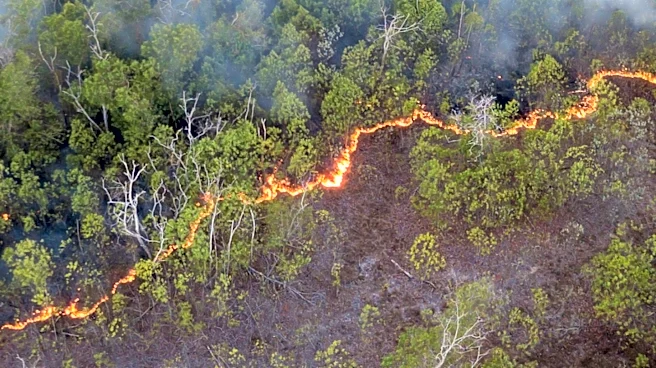
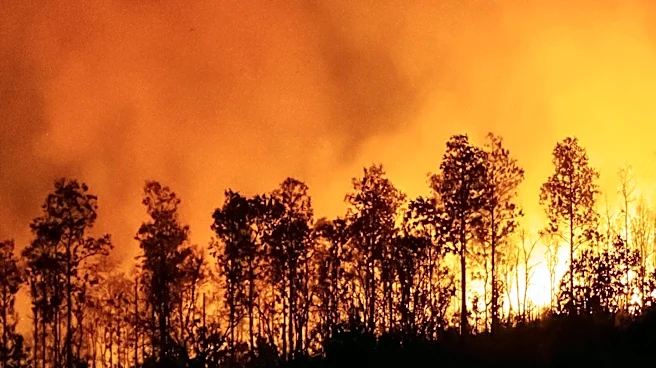
Researchers have discovered evidence of massive wildfires that occurred in Europe approximately 201 million years ago, during the Triassic-Jurassic extinction event. These fires were likely triggered by volcanic activity associated with the breakup of the supercontinent
Pangaea. The fires released significant amounts of carbon dioxide and other gases, contributing to a global temperature increase of 5 to 10 degrees Celsius. This environmental shift led to the extinction of over 20% of marine species and many large terrestrial vertebrates, paving the way for the rise of dinosaurs.
Why It's Important?
The study of these ancient wildfires provides insight into the impact of climate change and natural disasters on biodiversity and ecosystem dynamics. Understanding past extinction events can help scientists predict and mitigate the effects of current and future climate change. The findings highlight the role of vegetation, such as ferns, in both fueling and recovering from wildfires, offering lessons for modern forest management and conservation efforts. This research underscores the interconnectedness of geological events, climate change, and biological evolution.
Beyond the Headlines
The research also sheds light on the resilience and adaptability of certain plant species, like ferns, which thrived in the aftermath of the wildfires. These plants played a crucial role in reshaping the landscape and creating new ecological niches. The study emphasizes the importance of preserving diverse plant species that can withstand environmental changes and support ecosystem recovery. Additionally, the findings may inform strategies for managing fire-prone areas and protecting biodiversity in the face of climate change.