






What's Happening?
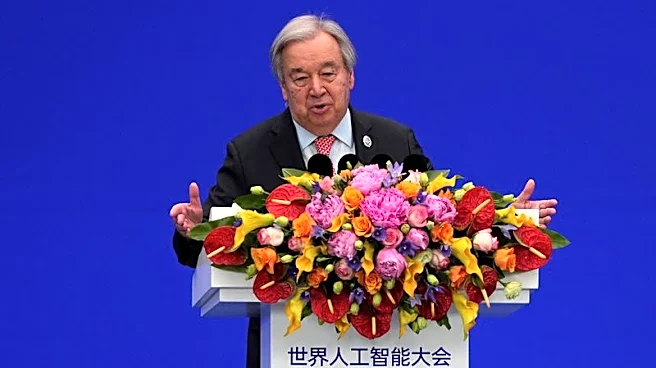
U.N. Secretary-General António Guterres has made a significant appeal to the international community to support the Syrian people during his visit to Damascus. This marks his first visit to Syria as U.N. chief, nearly two years after the fall of Bashar
Assad. Guterres met with Syria’s interim president, Ahmad al-Sharaa, and toured the old quarter of Damascus. The visit comes as Syria attempts to recover from a devastating conflict that began in 2011, resulting in nearly half a million deaths and extensive destruction. Despite the end of the Assad family's five-decade rule in 2024, Syria continues to face challenges, including the impact of Western sanctions and cuts to international aid. The U.N. estimates that 90% of Syria's population lives in poverty, and the World Bank has assessed that rebuilding the country could cost approximately $216 billion.
Why It's Important?
The visit by U.N. Secretary-General Guterres underscores the ongoing humanitarian and reconstruction challenges in Syria. The international community's response to his appeal could significantly impact the pace and effectiveness of Syria's recovery efforts. With a large portion of the population living in poverty, international aid and support are crucial for rebuilding infrastructure and improving living conditions. The lifting of some sanctions by the U.S. and Europe has not yet translated into substantial on-ground improvements, highlighting the need for sustained international engagement. The situation in Syria also has broader geopolitical implications, particularly concerning regional stability and relations with neighboring countries like Israel.
What's Next?
During his visit, Guterres is expected to engage with U.N. forces along the Israeli border, a region of strategic importance. The international community's response to his call for support will be critical in determining the next steps in Syria's reconstruction. Potential reactions from major stakeholders, including political leaders and international organizations, will shape the future of aid and development efforts in the region. The ongoing dialogue between Syria's interim government and international actors will be pivotal in addressing both immediate humanitarian needs and long-term reconstruction goals.