
What's Happening?
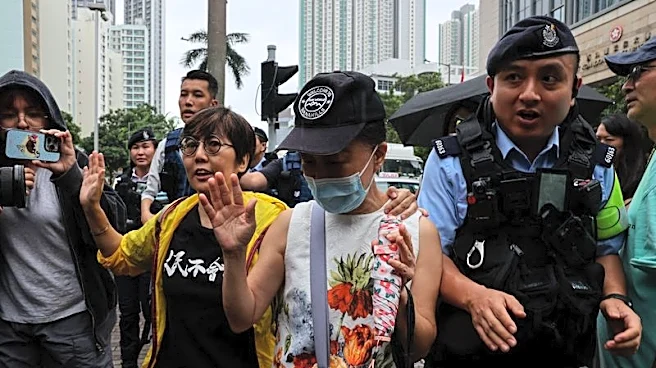
Chow Hang-tung and Lee Cheuk-yan, former leaders of the now-defunct Hong Kong Alliance in Support of Patriotic Democratic Movements of China, have been convicted of incitement to subversion under Beijing's imposed national security law. The verdict was
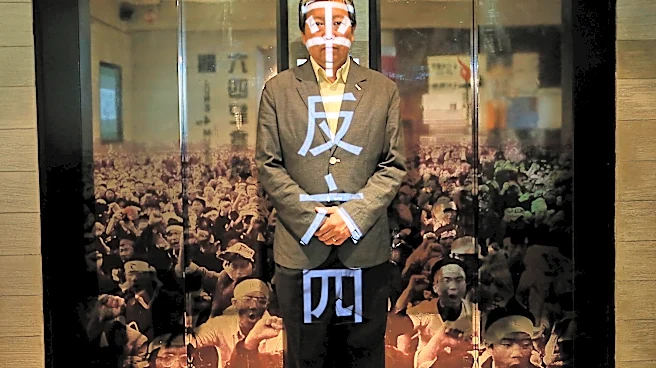
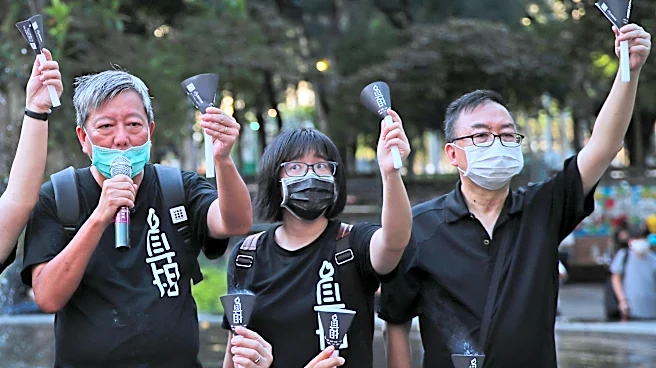
handed down by three national security judges at the West Kowloon Law Courts Building. The pair, who have been detained since September 2021, now face potential imprisonment of up to 10 years. Prosecutors argued that the Alliance incited others to overthrow the ruling Chinese Communist Party (CCP) through its long-standing call to 'end one-party rule' in China, a core principle of the group since its establishment in 1989. A third defendant, former lawmaker Albert Ho, previously pleaded guilty in January. The judges stated that Lee, Ho, and Chow were consistently hostile towards the CCP and the Central Government, refusing to compromise and adhering to the Alliance's resistance line even after the national security law was enacted. While acknowledging that the activists did not propose specific methods or timelines for their goal and that the Alliance never advocated violence, the court found they continued to spread the 'end one-party dictatorship' message after the security law's implementation. They also drew parallels between the 2019 anti-extradition protests and the 1989 Tiananmen crackdown, which the judges concluded stirred hostility among Hongkongers towards the CCP and undermined public confidence in its leadership.
Why It's Important?
The conviction of Chow Hang-tung and Lee Cheuk-yan under the national security law marks a significant escalation in the suppression of dissent and the erosion of civil liberties in Hong Kong. This ruling effectively criminalizes calls for political reform and challenges to the Chinese Communist Party's authority, even if those challenges are non-violent. For the United States and other Western nations, this development reinforces concerns about Beijing's tightening grip on Hong Kong and its disregard for the 'one country, two systems' framework. It highlights the diminishing space for free expression and assembly, which were once hallmarks of Hong Kong's unique status. The outcome of this trial could further strain diplomatic relations between the U.S. and China, as the U.S. has consistently voiced support for democratic freedoms in Hong Kong. Businesses operating in Hong Kong may also face increased uncertainty and pressure, as the legal landscape becomes more restrictive, potentially impacting investment and the city's standing as a global financial hub. The case serves as a stark reminder of the risks associated with advocating for political change in a region under increasing authoritarian control.
What's Next?
The proceedings are adjourned until next Friday morning for mitigation before sentencing, where Chow Hang-tung and Lee Cheuk-yan could face up to 10 years in prison. Judge Alex Lee cited Article 23 of the national security law, which outlines sentencing principles for subversion offenses, indicating that serious cases warrant five to ten years, while minor cases face up to five years. The court expects prosecutors to provide guidance on the categorization of the offense. This sentencing will be closely watched by international observers, human rights organizations, and foreign governments, including the United States, for further indications of the severity of Beijing's crackdown on dissent in Hong Kong. The outcome could lead to further international condemnation and potential diplomatic actions. The case also sets a precedent for future national security trials, potentially discouraging any remaining pro-democracy activism in the city. The families and supporters of the activists, who were present in court, will likely continue to advocate for their release and for the preservation of Hong Kong's freedoms.
Beyond the Headlines
This conviction extends beyond the immediate legal ramifications for the activists, signaling a profound shift in Hong Kong's political and social fabric. The criminalization of calls to 'end one-party rule' effectively redefines the boundaries of acceptable political discourse, moving Hong Kong further away from its promised autonomy and closer to mainland China's authoritarian system. The case highlights the ethical dilemma faced by individuals and organizations attempting to uphold democratic values in an increasingly restrictive environment. It also underscores the long-term implications for Hong Kong's identity as a city that once prided itself on its freedoms and rule of law. The international community, particularly the U.S., faces the challenge of balancing diplomatic engagement with China against the imperative to support human rights and democratic principles in Hong Kong. This development could accelerate the exodus of talent and capital from Hong Kong, as individuals and businesses reassess the city's future under the national security law. The memory of the Tiananmen Square crackdown, which the Alliance sought to commemorate, now becomes even more intertwined with the ongoing struggle for freedom in Hong Kong, creating a complex historical and political narrative.