





What's Happening?
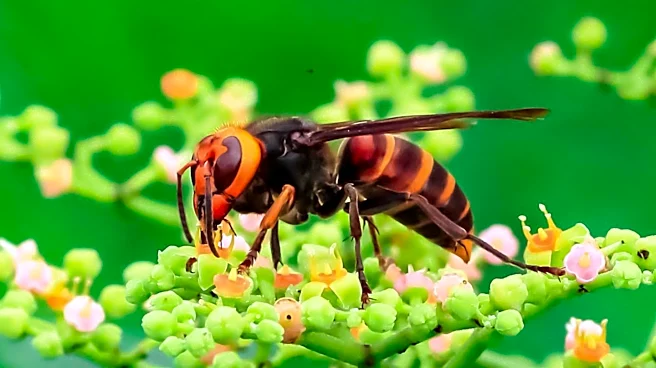
Georgia and South Carolina are actively working to eradicate the yellow-legged hornet, an invasive species from Asia that poses a significant threat to honeybee colonies in the southern U.S. The hornets, which first appeared in Georgia in 2023, likely
arrived via a cargo ship. They are known to ambush and dismember honeybees, consuming their thoraxes to feed their young. This predatory behavior causes honeybees to become reluctant to leave their hives, leading to colony collapse. Brad Cavin, who leads South Carolina's invasive species response team for yellow-legged hornets, reported finding 16 nests in South Carolina in 2024 and destroying approximately 500 this year. In Georgia, trackers have removed about 80 nests this year. Sightings have now also been reported in North Carolina. Eradication efforts involve tracking hornets back to their nests, which can be as large as an exercise ball and are often hidden in trees or under roofs, and then injecting them with insecticide or removing them physically, sometimes requiring tree climbers for higher nests.
Why It's Important?
The spread of the yellow-legged hornet is a critical environmental and economic concern for the U.S., particularly for the agricultural sector. Honeybees are vital pollinators for a wide range of crops, and their decline due to invasive predators like this hornet could have devastating effects on agricultural yields and food security. Beekeepers, like David Arnal of Hilton Head Island, have already reported significant losses to their colonies, impacting their ability to pollinate produce. The cost of removing nests, which can be up to $3,000 each, places a financial burden on states and local communities. The reliance on federal and state funding for eradication efforts highlights the need for sustained investment in invasive species management. If left unchecked, the hornet's expansion could lead to widespread ecological disruption, affecting not only honeybee populations but also the broader ecosystem that depends on these pollinators. The situation underscores the vulnerability of native species to invasive threats and the interconnectedness of environmental health and economic stability.
What's Next?
Eradication efforts are expected to continue and intensify as the yellow-legged hornet spreads. Teams in Georgia and South Carolina will persist in tracking and destroying nests, relying on federal and state funding. The recent sightings in North Carolina indicate a potential expansion of the hornet's range, necessitating coordinated efforts across state lines. Public awareness campaigns encouraging residents to report sightings will be crucial for early detection and containment. Researchers will likely continue to study the hornet's behavior and biology to develop more effective control methods. The long-term success of these efforts will depend on sustained funding, inter-state cooperation, and community involvement. The agricultural industry and beekeepers will need to adapt to this new threat, potentially implementing protective measures for their colonies. The situation also emphasizes the ongoing challenge of preventing invasive species from entering the U.S. through international trade and travel, suggesting a need for enhanced biosecurity measures at ports of entry.
Beyond the Headlines
The invasion of the yellow-legged hornet highlights a broader ecological issue: the increasing frequency and impact of invasive species due to global trade and climate change. These species can disrupt delicate ecosystems, outcompete native species, and cause significant economic damage. The hornet's ability to decimate honeybee populations underscores the fragility of pollinator systems, which are already under pressure from habitat loss, pesticide use, and other environmental factors. This situation serves as a stark reminder of the interconnectedness of global ecosystems and the potential for seemingly isolated events, like a hornet hitchhiking on a cargo ship, to have far-reaching consequences. It also raises ethical questions about human responsibility in mitigating the ecological damage caused by globalization. The ongoing battle against the yellow-legged hornet is a microcosm of the larger fight to preserve biodiversity and maintain ecological balance in an increasingly globalized world, requiring continuous vigilance and adaptive management strategies.