






What's Happening?
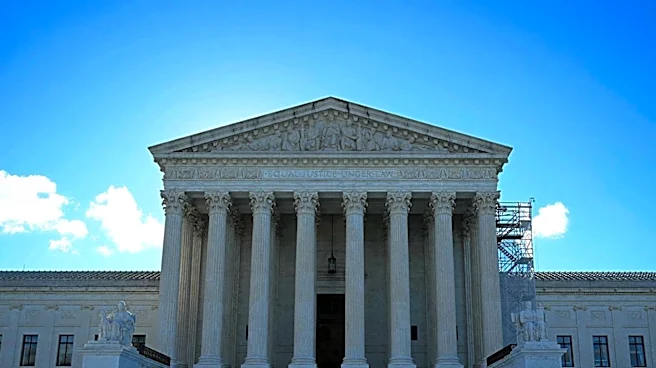
Kermit Roosevelt, a professor at Penn Carey Law, has released a new book titled 'Advanced Introduction to the US Supreme Court.' The book provides a comprehensive overview of the Supreme Court's history, its evolving role, and potential reform ideas.
Roosevelt examines the Court's dual perception as both a heroic enforcer of the Constitution and a body imposing personal values. The book discusses the Court's institutional evolution and the conditions leading to public perceptions of its actions. Roosevelt also explores reform proposals, such as implementing term limits, to align the Court more closely with the will of a national majority.
Why It's Important?
Roosevelt's book offers a critical examination of the Supreme Court's role in American governance, highlighting its significant influence as a powerful institutional actor. By exploring the Court's historical and theoretical context, the book provides insights into the complexities of judicial decision-making and its impact on society. The discussion of potential reforms, such as term limits, is particularly relevant in the current political climate, where debates about the Court's composition and decisions are increasingly prominent. Understanding the Court's role and potential reforms is crucial for informed public discourse and policy-making.
Beyond the Headlines
The book delves into the ethical and institutional challenges faced by the Supreme Court, emphasizing the need for transparency and accountability in its operations. Roosevelt's analysis encourages readers to view the Court not as a monolithic entity but as a dynamic institution subject to change and reform. The exploration of term limits and other reforms reflects broader societal debates about the balance of power and the need for democratic accountability in the judiciary. This perspective is essential for fostering a more nuanced understanding of the Court's place in the American political system.