




What's Happening?
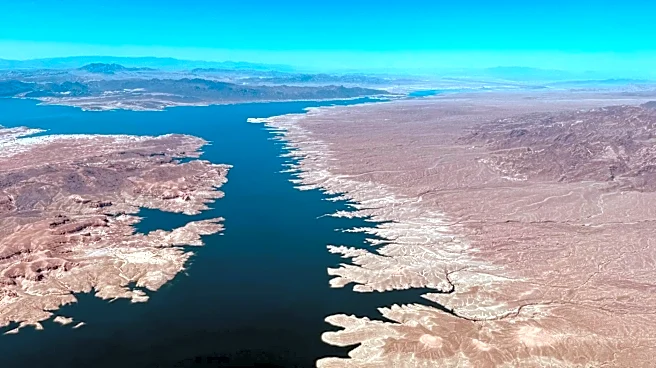
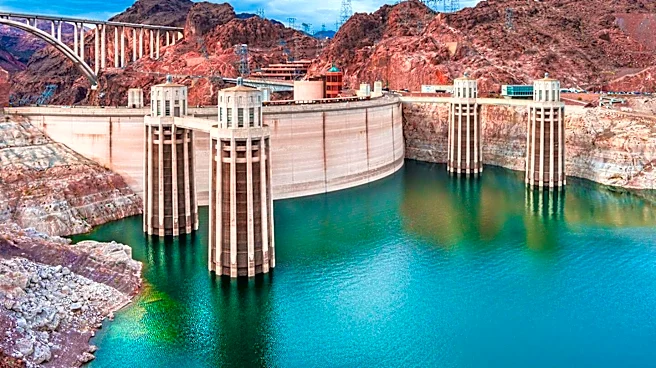
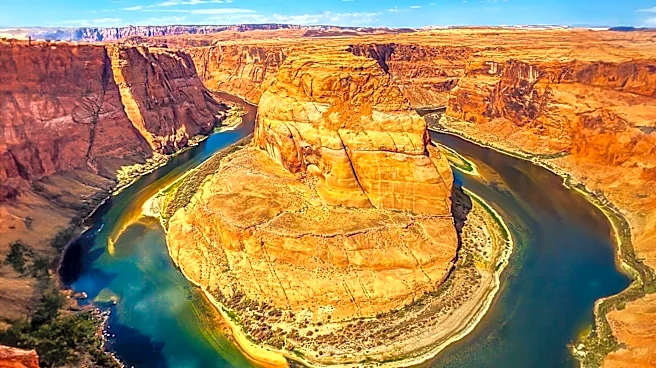
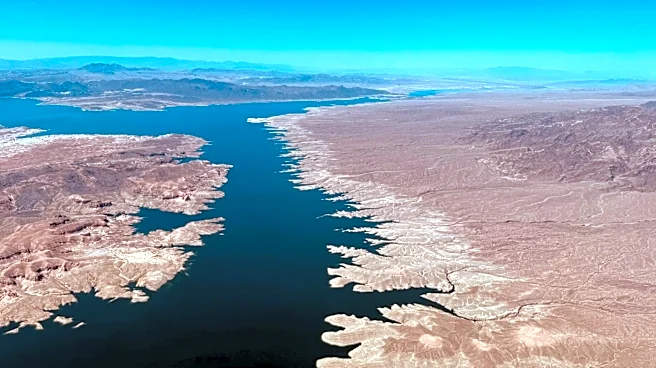
Water managers across the Colorado River Basin are awaiting a federal report that will outline future water management strategies for the river's key reservoirs. The report is expected to address how to manage the river basin's reservoirs, Lake Powell
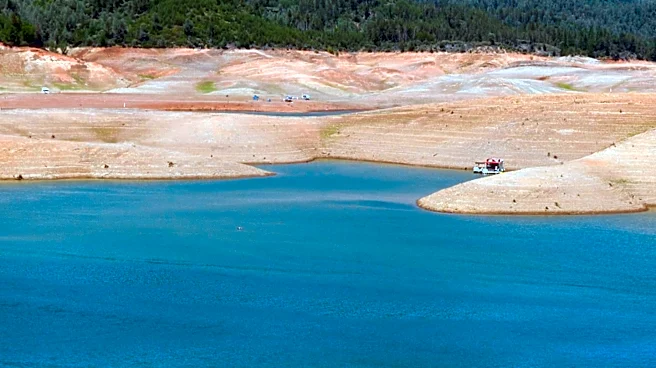
and Lake Mead, which are at historic low levels. The Colorado River's flow has decreased by 20% over the last 27 years, with a 33% decline since 2020. The federal plan comes after years of gridlocked negotiations among basin states, and it will set water release and storage rules for the next decade. The plan is expected to impose upper limits on water cuts for Lower Basin states and regulate Lake Powell's releases. However, the plan's short-term framework may lead to continuous negotiations, posing challenges for water management.
Why It's Important?
The Colorado River is a crucial water source for approximately 40 million people across several states. The declining water levels in Lake Mead and Lake Powell threaten water availability for cities, agriculture, and industries in the region. The federal management plan aims to address the imbalance between water supply and demand, but its short-term nature may lead to ongoing uncertainty and legal disputes among states. The plan's effectiveness will significantly impact water security, economic stability, and environmental sustainability in the region.
What's Next?
The federal plan will be released soon, and water managers will need to adapt to the new rules. States may face legal challenges over water allocations, and ongoing negotiations will be necessary to address changing water conditions. The plan's implementation will require collaboration among states, water users, and federal agencies to ensure sustainable water management. Stakeholders will need to focus on long-term solutions to address the root causes of water shortages and climate change impacts.