



What's Happening?
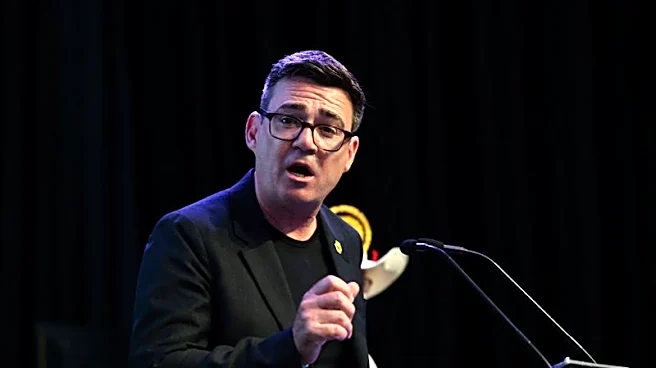
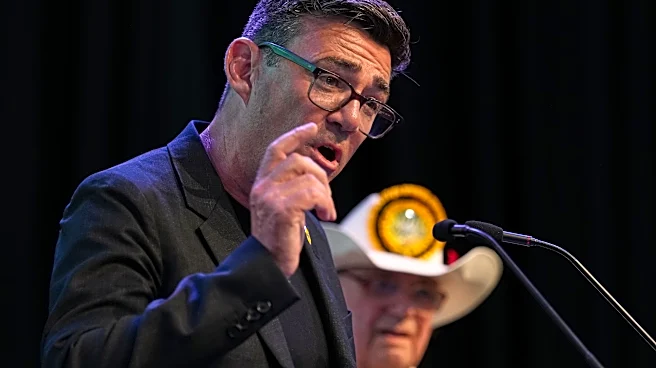
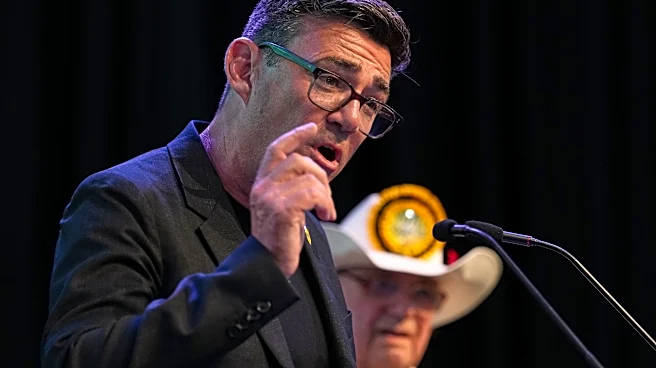
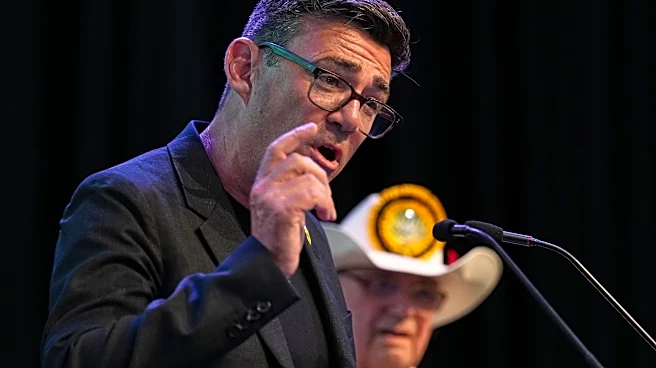
Andy Burnham, the former Mayor of Greater Manchester, has won a special election to the British Parliament, representing the Makerfield constituency in north-west England. This victory positions him to potentially challenge Prime Minister Keir Starmer
for the leadership of the Labour Party. Burnham secured the seat by defeating the Reform U.K. party with a significant margin, capturing nearly 55% of the vote. In his victory speech, Burnham emphasized that Makerfield is not merely a stepping stone but a touchstone, promising to focus on neglected communities. He hinted at a leadership bid, advocating for a new politics based on unity and hope, and criticized the divisive politics seen in the United States.
Why It's Important?
Burnham's victory and potential leadership challenge could significantly impact the Labour Party's direction and the broader political landscape in the UK. His leadership could shift the party's focus towards more progressive policies, potentially affecting fiscal policies and economic strategies. Markets are closely watching Burnham's next moves, particularly regarding fiscal discipline and inflationary pressures. The UK is currently facing a high budget deficit, and any deviation from existing fiscal rules could influence investor confidence and government bond yields. Burnham's approach to these economic challenges will be crucial in determining his support within the party and among the public.
What's Next?
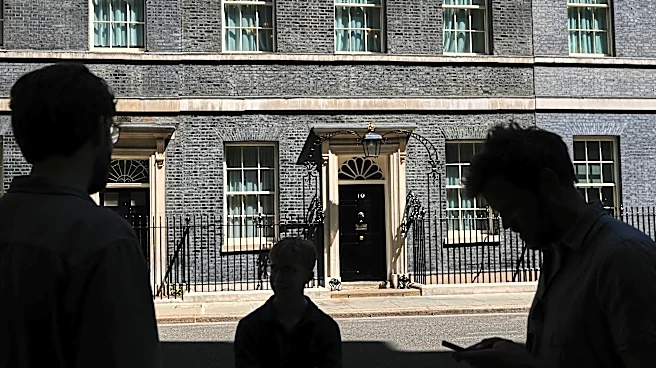
If Burnham decides to challenge Starmer, he will need the backing of at least 81 Labour lawmakers. The coming weeks will be critical as Burnham seeks to consolidate support within the party. The Autumn Budget will be a significant test for the Labour government, as it will reveal how Burnham plans to address fiscal challenges. Investors and political analysts will be watching closely to see if Burnham's policies align with Labour's existing fiscal rules or if he proposes new economic strategies. The outcome of this potential leadership challenge could reshape the Labour Party's future and its approach to governance.
Beyond the Headlines
Burnham's potential leadership bid highlights the ongoing debate within the Labour Party about its ideological direction. His emphasis on unity and hope suggests a desire to move away from divisive politics, which could resonate with voters seeking change. However, his leadership could also face resistance from those within the party who favor a more centrist approach. The broader implications of Burnham's rise could extend beyond the UK, as his criticism of US-style politics may influence international perceptions of political discourse and governance.