





What's Happening?
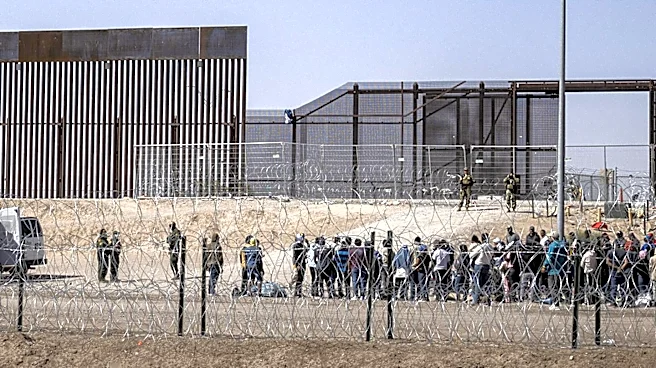
Rwanda is in preliminary discussions with the European Union regarding the establishment of migrant return hubs. This initiative aims to create an 'emergency transit mechanism' for families who cannot be immediately returned to their home countries or resettled
elsewhere. The Rwandan government, represented by spokesperson Yolande Makolo, confirmed these talks but noted that no formal agreement has been reached. This development comes as Rwanda continues to receive asylum seekers from Libya under the Emergency Transit Mechanism (ETM), with 177 individuals recently evacuated, bringing the total to 3,000 since 2019. The ETM primarily assists individuals from conflict-affected regions such as Sudan, Eritrea, South Sudan, Ethiopia, and Somalia.
Why It's Important?
The discussions between Rwanda and the EU highlight Rwanda's growing role in managing migration flows from conflict zones. This potential partnership could alleviate pressure on European countries struggling with migrant influxes by providing a temporary solution for asylum seekers. For Rwanda, this could enhance its international standing and attract support for its humanitarian efforts. However, it also raises questions about the long-term sustainability of such arrangements and the capacity of Rwanda to manage increased numbers of migrants. The outcome of these talks could influence future EU migration policies and partnerships with African nations.
What's Next?
If an agreement is reached, Rwanda could see an increase in the number of asylum seekers it hosts, necessitating further infrastructure and resource development. The EU may need to provide financial and logistical support to ensure the success of these hubs. Stakeholders, including human rights organizations, will likely monitor the situation closely to ensure that the rights and needs of asylum seekers are adequately addressed. The outcome of these discussions could set a precedent for similar agreements between the EU and other African countries.