







What's Happening?
The New Jersey Board of Public Utilities is imposing a $44.1 million fine on Jersey Central Power & Light (JCP&L), a subsidiary of FirstEnergy, for failing to meet reliability benchmarks in 2022, 2023, and 2024. This decision follows significant power
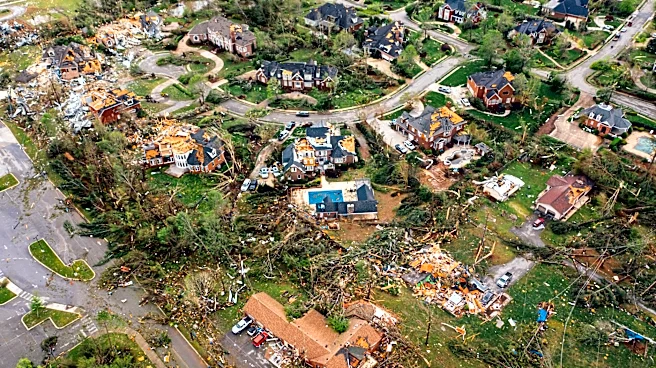
outages during a heatwave over the Fourth of July weekend, which left thousands of residents without electricity. The outages were exacerbated by storms with winds reaching up to 80 mph, affecting approximately 300,000 customers. Criticism has been directed at JCP&L for not adequately reinforcing their systems to handle such weather events. The utility company serves 1.1 million customers across 13 counties in New Jersey.
Why It's Important?
The fine represents a significant regulatory action aimed at holding utility companies accountable for service reliability. The outages have highlighted the vulnerability of the power grid to extreme weather, a concern that is increasingly relevant in the context of climate change. Residents, particularly in areas like Lakewood, have expressed frustration over the lack of electricity during high temperatures, which poses health risks and disrupts daily life. The fine also underscores the need for utility companies to reinvest in infrastructure to prevent future outages, rather than diverting funds to parent companies. This regulatory move could set a precedent for how utility companies are managed and held accountable in the future.
What's Next?
The New Jersey Board of Public Utilities has set August 12 as the deadline for public participation or intervention in the case. There is potential for legislative action to enhance customer service and give the utility board more enforcement power. Local officials and residents are calling for prompt action to prevent similar incidents. JCP&L has announced over $1 billion in investments this year, claiming that recent upgrades have benefited customers. However, skepticism remains among local leaders and residents about the effectiveness of these measures. The situation may lead to increased scrutiny and potential reforms in utility management and infrastructure investment.