
What's Happening?
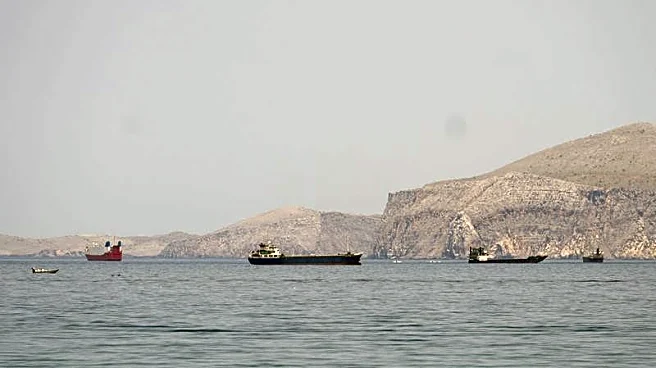
President Trump has instructed his aides to continue the U.S. blockade of the Strait of Hormuz, a critical passage for global energy supplies, until Iran agrees to a new nuclear deal. This strategic move
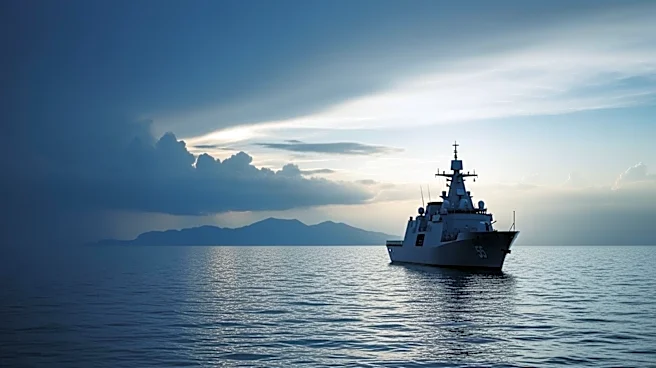
aims to pressure Iran by cutting off significant revenue from oil exports, which are vital to its economy. The blockade has drastically reduced the number of vessels passing through the strait, which typically sees 125 to 140 vessels transporting about 20 million barrels of oil daily. The U.S. naval forces have specifically targeted Iranian oil shipments, forcing several tankers to return to the Persian Gulf. This action has led to a significant increase in global oil prices, with Brent crude reaching its highest levels since June 2022.
Why It's Important?
The blockade of the Strait of Hormuz by the U.S. is a significant geopolitical maneuver with far-reaching economic implications. It is designed to exert maximum pressure on Iran by crippling its oil-dependent economy, which could potentially lead to concessions in nuclear negotiations. However, this strategy also risks escalating global oil prices, which can lead to increased costs for consumers and businesses worldwide. The disruption in oil supply chains could exacerbate inflationary pressures, affecting economic stability in oil-importing countries. Additionally, the blockade could strain U.S. relations with allies who are dependent on oil passing through the strait.
What's Next?
If the blockade continues, Iran may face severe economic challenges, potentially leading to internal instability. The U.S. hopes that the economic strain will force Iran to negotiate a new nuclear agreement. However, prolonged high oil prices could lead to global economic repercussions, prompting other nations to seek alternative energy sources or diplomatic solutions. The situation remains fluid, with potential for further escalation or diplomatic breakthroughs.