





What's Happening?
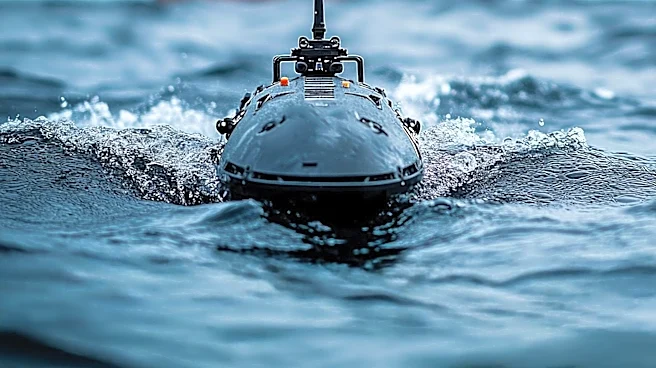
The Royal Navy is set to expand its maritime defense efforts by integrating drones with allied warships, in response to a 41% increase in Russian naval activity around the UK in the first nine months of 2026. Luke Pollard, the UK minister for defense readiness,
announced plans for sea drones from the UK and other Northern Navies Initiative countries (including the Netherlands, Baltic, and Nordic nations) to operate interchangeably with allied warships. This initiative aims to enhance lethality and address potential shortfalls in the number of British frigates, which could decrease significantly by 2030. The UK has allocated £1.5 billion for sea drones over four years, with an additional £90 million designated for underwater drones and sensors to monitor Russian submarine activity in the Greenland-Iceland-UK gap.
Why It's Important?
This strategic shift by the UK highlights the growing importance of unmanned systems in modern naval warfare and reflects concerns over escalating Russian maritime presence. The increased Russian activity, including spy ships mapping critical national infrastructure and frigates escorting trade vessels, poses a direct threat to UK and NATO security. By integrating drones, the Royal Navy aims to maintain deterrence and operational effectiveness despite potential reductions in its traditional warship fleet. This move also emphasizes interoperability among allied nations, allowing for a more flexible and robust collective defense. The investment in underwater drones and sensors is crucial for monitoring Russian submarine activity in a key strategic choke point, safeguarding vital undersea cables and maritime routes.
What's Next?
The UK's plan involves further development and deployment of sea drones that can operate seamlessly with warships from partner nations within the Northern Navies Initiative. This will require continued technological integration and joint training exercises to ensure interoperability. The allocated funding will support the acquisition and development of these advanced unmanned systems. Politically, the initiative may also serve to pressure European NATO allies to increase their defense spending and take greater responsibility for their own security, potentially influencing broader NATO strategy. The effectiveness of this drone-centric approach will be closely watched as a model for future naval defense strategies in response to evolving geopolitical threats.
Beyond the Headlines
This development signifies a potential paradigm shift in naval warfare, moving towards a more distributed and technologically advanced force structure. The emphasis on drones reflects a recognition that low-cost, adaptable unmanned systems can significantly augment traditional naval power, as demonstrated by Ukraine's success in using sea drones against Russia's Black Sea fleet. This transformation could lead to a global re-evaluation of naval procurement and operational doctrines, with a greater focus on autonomous systems and networked capabilities. Ethically, the increased reliance on autonomous weapons systems raises questions about command and control, accountability, and the future of human involvement in combat decisions, which will require ongoing international dialogue and policy development.