







What's Happening?
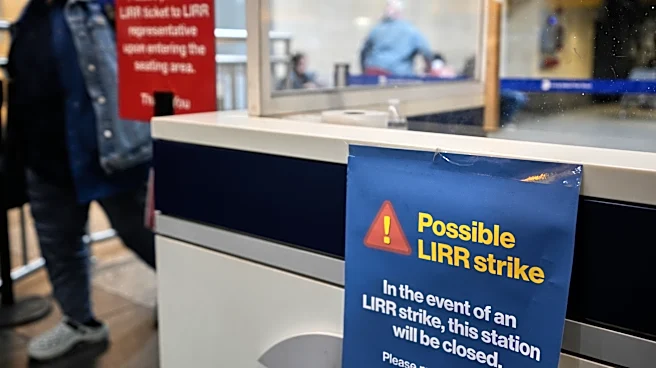
The Long Island Rail Road (LIRR), North America's busiest commuter rail system, has been shut down due to a strike by union workers. This marks the first strike since 1994, as union members rejected the latest contract offers from the Metropolitan Transportation
Authority (MTA). The shutdown has left many commuters scrambling to find alternative ways to travel, significantly impacting daily routines and causing widespread inconvenience.
Why It's Important?
The LIRR shutdown highlights the vulnerability of public transportation systems to labor disputes. With thousands of commuters affected, the strike underscores the importance of robust contingency planning and effective labor negotiations. The disruption could have broader economic impacts, affecting productivity and local businesses that rely on commuter traffic. The situation also raises questions about the sustainability of current labor practices and the need for long-term solutions to prevent future disruptions.
What's Next?
As the strike continues, pressure is likely to mount on both the MTA and the union to reach a resolution. Commuters and businesses affected by the shutdown may advocate for a swift resolution to minimize economic and social impacts. The outcome of the negotiations could influence future labor relations and set a precedent for handling similar disputes in the transportation sector.