
What's Happening?
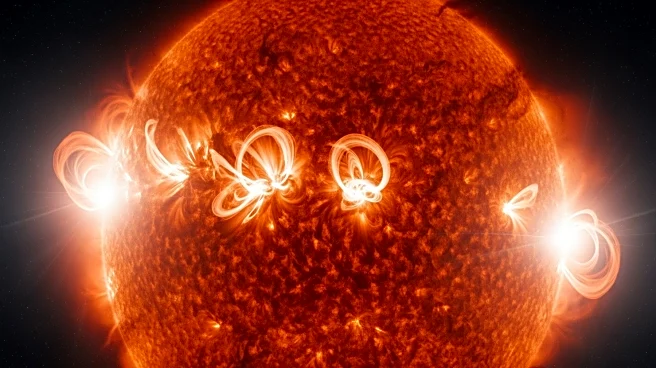
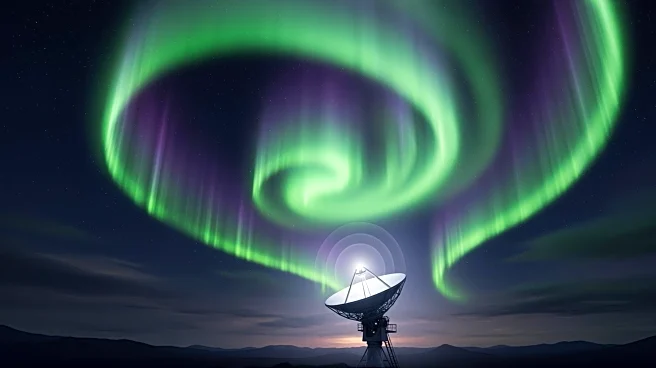
The strongest solar storm in more than 20 years has struck Earth, following a powerful X-class solar flare. This event has caused geomagnetic disturbances worldwide, leading to rare aurora displays across
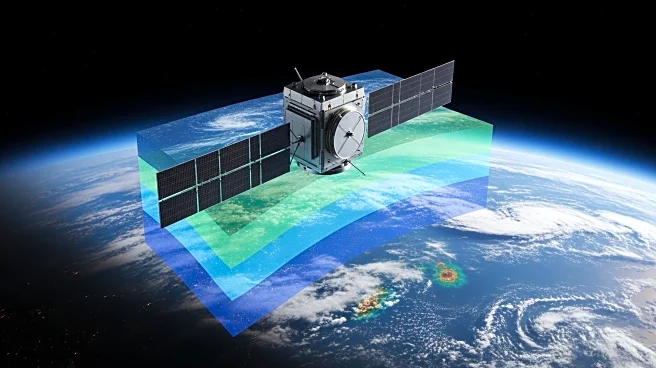
several countries. The solar flare, classified as an X1.9 event, launched a fast coronal mass ejection that reached Earth, causing significant magnetic field disturbances. The storm, classified as a G4 severe event by the National Oceanic and Atmospheric Administration, resulted in minor signal and satellite disruptions. Despite the technological impacts, the storm produced stunning auroral displays visible across Europe and North America.
Why It's Important?
The solar storm highlights the growing impact of intense solar activity on modern technology. While the auroras provide a visual spectacle, the storm's potential to disrupt satellite operations and communication systems poses challenges for technological infrastructure. Understanding and predicting such solar events are crucial for mitigating their effects and ensuring the resilience of critical systems. The event also emphasizes the importance of space weather research and monitoring to protect technological assets and maintain operational continuity.
What's Next?
Space weather officials expect the activity to gradually decline, with residual effects potentially continuing for several days. Scientists will continue to monitor solar region 14341 closely, as further eruptions remain possible. The public's interest in the auroral displays may lead to increased awareness and educational efforts regarding space weather phenomena. Agencies will assess the impact on satellite operations and provide guidance to mitigate potential disruptions in the future.