



What's Happening?
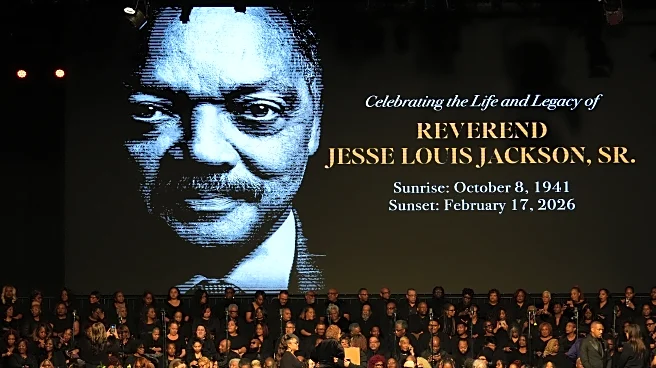
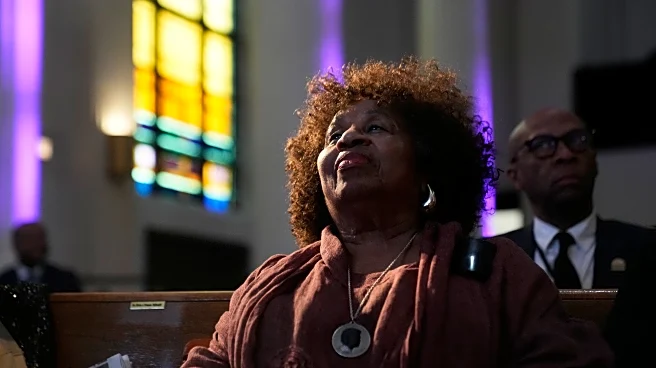
A homegoing service for the late civil rights leader Rev. Jesse Jackson is being held at the House of Hope megachurch in Chicago. The event features tributes from former Presidents Barack Obama, Joe Biden, and Bill Clinton, as well as performances by
artists like Jennifer Hudson and gospel singers Bebe Winans and Pastor Marvin Winans. The service, which began with a delay, is attended by notable figures including former Vice President Kamala Harris, Chicago Mayor Brandon Johnson, and Illinois Governor J.B. Pritzker. The memorial is part of a series of events honoring Jackson, who passed away on February 17 at the age of 84. His contributions to civil rights, including his early efforts against segregation and his presidential runs in the 1980s, are being remembered and celebrated.
Why It's Important?
The celebration of Jesse Jackson's life underscores his significant impact on the civil rights movement and American politics. Jackson's work in advocating for equality and social justice has left a lasting legacy, influencing generations of activists and leaders. The presence of high-profile figures at his memorial highlights the respect and admiration he garnered across political and social spectrums. His efforts in desegregation and his role in pivotal civil rights events, such as marching with Martin Luther King Jr. in Selma, have been instrumental in shaping the fight for racial equality in the United States. The memorial serves as a reminder of the ongoing struggle for civil rights and the importance of leadership in advocating for change.
What's Next?
Following the public memorial, a private service will be held, with Jackson's body returning to the Rainbow PUSH Coalition headquarters for a celebration streamed online. He will be laid to rest at Oak Woods Cemetery in Chicago, joining other civil rights icons. The events surrounding his passing may inspire renewed focus on civil rights issues and encourage current and future leaders to continue his work. The tributes and reflections on his life could also lead to discussions on the progress made and the challenges that remain in achieving racial equality.