







What's Happening?
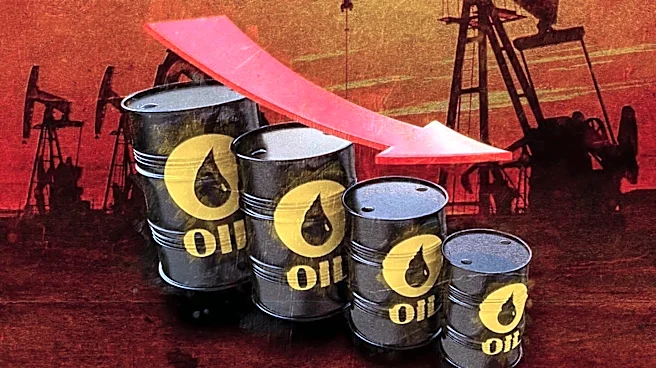
The Inter-American Development Bank (IDB) has issued a report describing Guyana's economic outlook as 'highly uncertain' due to risks associated with oil prices, which are being driven by persistent geopolitical tensions. Despite projections for Guyana's economy
to grow by an average of 14% between 2026 and 2030, the IDB's Caribbean Economics Quarterly report, titled 'Fiscal Resilience, Debt Reduction and Domestic Resource Mobilization in the Caribbean,' highlights significant vulnerabilities. The report, which also covers the Bahamas, Barbados, Jamaica, Suriname, and Trinidad and Tobago, warns that high global interest rates, volatile energy markets, and external shocks can quickly pressure national budgets. While Guyana is a net oil exporter, the IDB notes that oil prices are expected to remain low in the medium term and could fall further, potentially tempering the country's oil boom.
Why It's Important?
The IDB's warning is crucial because it highlights the inherent risks of an economy heavily reliant on a single commodity, even one experiencing a boom. For Guyana, the 'highly uncertain' outlook, despite strong growth projections, underscores the potential for 'Dutch disease,' where a booming sector (oil) can lead to the neglect and uncompetitiveness of other industries. Volatile oil prices, influenced by geopolitical tensions, can create significant fiscal instability, impacting government revenues and expenditure planning. This situation also poses a challenge for policymakers to diversify the economy and build resilience against external shocks. The report's broader message for Caribbean governments about the difficult international financial environment, characterized by high interest rates and volatile energy markets, emphasizes the need for robust fiscal management and strategic planning to safeguard economic stability and sustainable development.
What's Next?
Guyana's government will need to closely monitor global oil price movements and geopolitical developments. The IDB's report implicitly calls for strategies to mitigate the risks of oil price volatility and 'Dutch disease.' This could involve implementing policies to diversify the economy, strengthen non-oil sectors, and build fiscal buffers to absorb potential shocks. Policymakers may also need to consider measures to manage the impact of oil price fluctuations on domestic fuel and electricity prices. For the wider Caribbean, the IDB's recommendations for fiscal resilience, debt reduction, and domestic resource mobilization will be critical. Governments are urged to prepare for external shocks and adopt prudent financial management practices to ensure long-term economic stability.
Beyond the Headlines
The IDB's assessment of Guyana's oil-driven economy brings to light the complex challenges and opportunities associated with newfound resource wealth. While oil can be a powerful engine for growth, it also carries the risk of exacerbating economic inequalities, environmental degradation, and political instability if not managed effectively. The concept of 'Dutch disease' is a stark reminder that rapid growth in one sector can undermine others, leading to an unbalanced economy. This situation also raises ethical considerations about resource extraction, its impact on climate change, and the responsibility of governments to ensure that wealth benefits all citizens. The long-term implications for Guyana will depend on its ability to translate oil revenues into sustainable development, invest in human capital, and build a diversified, resilient economy that can withstand global market fluctuations and geopolitical pressures.