








What's Happening?
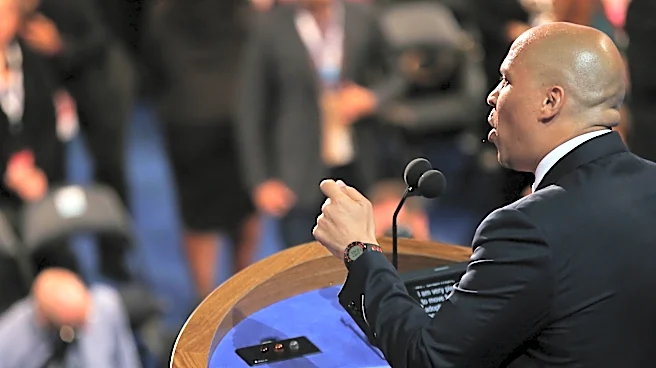
Senator Cory Booker of New Jersey delivered a historic 25-hour speech on the Senate floor, emphasizing the need to address the 'poverty of empathy' in the United States. This speech, which took place three months after President Trump's second inauguration,
was a call to action against the perceived decline in compassion within American politics. Booker urged the nation to expand empathy beyond mere feelings to actionable compassion, highlighting the importance of empathy in fostering human solidarity. His speech resonated widely, garnering over 350 million likes on TikTok, and inspired a series of protests known as the 'No Kings!' demonstrations. These protests, advocating for democracy and against authoritarian policies, have seen significant participation from older adults, who have been at the forefront of public events, advocating for social justice and empathy.
Why It's Important?
The emphasis on empathy in politics is crucial as it addresses the growing divide and isolation felt by many Americans, particularly during the Trump administration. The decline in empathy has been linked to harmful policies affecting immigrants and marginalized communities. Senator Booker's speech and the subsequent protests highlight a societal pushback against these policies, advocating for a return to compassionate governance. The involvement of older adults in these movements underscores a generational commitment to social justice, drawing on historical experiences of activism. This movement could influence future political landscapes, potentially impacting upcoming elections and policy decisions by emphasizing the need for empathy-driven governance.
What's Next?
The 'No Kings!' protests are expected to continue, with participants advocating for democracy and against authoritarianism. These movements may influence the political climate leading up to the 2026 and 2028 elections, as grassroots activism gains momentum. The protests also call for the restoration and expansion of government programs that support vulnerable populations, such as Meals on Wheels and homecare services. The ongoing demonstrations and public discourse may pressure policymakers to prioritize empathy and compassion in their legislative agendas, potentially leading to reforms that address the needs of marginalized communities.
Beyond the Headlines
The resurgence of empathy-driven activism highlights a cultural shift towards valuing compassion in public policy. This movement challenges the narrative of divisiveness and promotes solidarity across different demographics. The active participation of older adults in these protests not only defies ageist stereotypes but also serves as a reminder of the enduring impact of past social movements. The emphasis on empathy as a fundamental societal value could lead to long-term changes in how policies are crafted and implemented, fostering a more inclusive and equitable society.